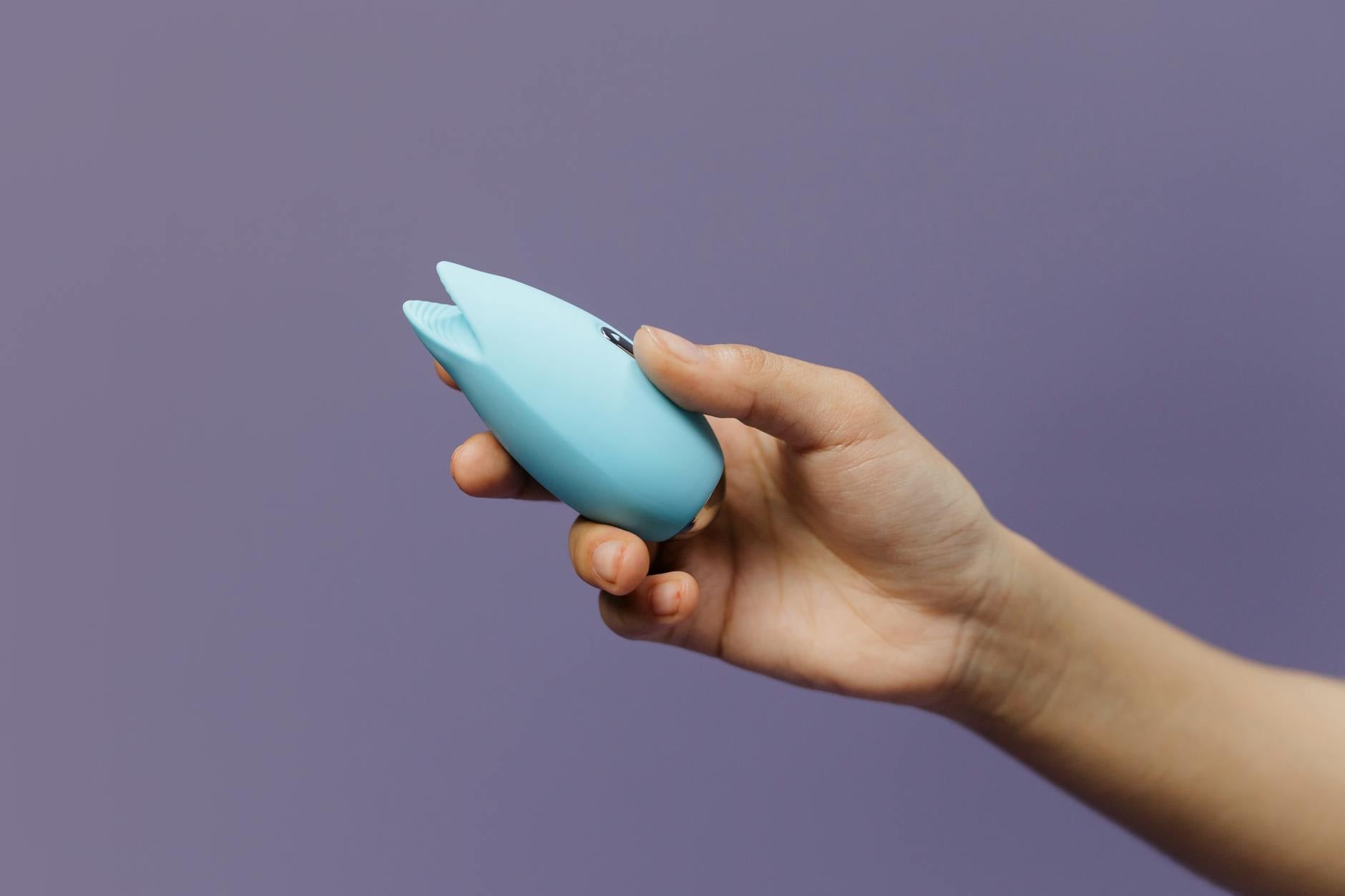
How to Use a Lemon Vibrator When You Have Clitoral Sensitivity Issues
Let's be real: clitoral sensitivity can feel like your body is working against you. Everything from pressure to fabric to direct stimulation triggers discomfort, and the idea of using any kind of vibrator seems impossible. But here's what I've seen work for hundreds of people in my practice: a lemon vibrator, when used correctly, can actually become the gentlest, most controlled way to access pleasure without pain.
The key is understanding that sensitivity and pleasure aren't mutually exclusive. You just need the right technique, settings, and expectations.
What causes clitoral sensitivity in the first place
Clitoral sensitivity conditions show up differently for different people. Some experience vulvodynia, a chronic pain condition where the vulva feels raw or burning. Others have provoked vestibulodynia, where only certain types of touch trigger pain. Still others develop temporary sensitivity from irritation, hormonal changes, or years of numbing through overstimulation.
The clitoris has roughly 8,000 nerve endings concentrated in one small area. When those nerves are inflamed, irritated, or sensitized, even light touch can feel like too much.
Here's what's important: this is not your fault, and it's not permanent. Sensitivity conditions are medical, not psychological, though stress and anxiety can absolutely make them worse. If you haven't already, see a vulvovaginal specialist or pelvic floor physical therapist. They can rule out infection, hormonal issues, or pelvic floor tension that might be amplifying the problem.
Once you've cleared the medical side, adapting how you use a lemon vibrator becomes possible.
Why a lemon vibrator works better for sensitive clits
A lemon sucker like the Lem uses suction and gentle pulsing instead of direct vibration. That matters hugely for sensitivity. Here's why:
Traditional vibrators press directly onto the clitoral head, concentrating all stimulation into one point. If your clit is already inflamed or overactive, that direct pressure can feel like you're touching a raw nerve.
Suction works differently. It creates a seal around the clitoral head, drawing the tissue into the opening and stimulating the entire clitoral body, not just the visible tip. The sensation is diffused across a wider area, which means less intense pressure per square millimeter. It feels less grabby, more enveloping.
The pulsing patterns on a lemon clitoral vibrator are also more forgiving than traditional vibration. Instead of continuous buzzing that keeps the tissue stimulated without break, pulses create rhythm. Your nerve endings get moments of rest between pulses. For sensitive clits, those micro-breaks matter.
How to set up your environment for maximum comfort
Before you even use the vibrator, the setup counts.
First: lubrication is not optional. Water-based lubricant creates a buffer between the vibrator opening and your skin, reducing friction and raw sensation. Apply it generously to your vulva and to the opening of the vibrator itself. The slicker everything is, the less resistance you'll feel.
Second: temperature. If you're dealing with inflammation, a cool vibrator feels better than a warm one. Store your lemon vibrator in the fridge for 15 minutes before use. It sounds weird. It works.
Third: positioning. Lie on your back with a pillow under your hips, elevating your pelvis slightly. This angle reduces pressure and lets you control depth. Avoid sitting upright or standing, which puts weight directly on your sensitive area.
Fourth: mental state. Anxiety tightens the pelvic floor, which amplifies sensitivity. Spend five minutes breathing before you start. In for four counts, hold for four, out for four. Your nervous system will regulate, and your clitoris will feel less reactive.
Starting with the lowest settings and building slowly
This is where most people go wrong. They turn on setting 3 or 4, expecting the same sensation as someone without sensitivity. Then they feel let down or, worse, triggered.
Start at setting 1. Not for a few seconds. For two to three minutes. I know that sounds slow. Your goal is not orgasm yet. Your goal is acclimation. You're teaching your nervous system that this sensation is safe, that it's not a threat.
On setting 1, you might not feel much at first. That's actually fine. You're not numbing yourself. You're desensitizing selectively, in the gentle way. After two or three minutes on setting 1, move to setting 2 for another minute or two. Notice the difference. Does it feel manageable? Does it feel interesting without being painful?
Pain is information. If you're feeling sharp pain, stinging, or burning, stop. That's your body saying no. But if you're feeling slight discomfort that fades as you relax, that's normal. Sensitivity conditions often feel like a low-grade rawness at first. That rawness can diminish as your pelvic floor relaxes and blood flow increases.
Many people find that settings 1 and 2 are their sweet spot. That's completely fine. You don't need to climb the dial to have an intense orgasm. Some of the most powerful orgasms I've witnessed in my practice came on the gentlest settings, because the person had finally found a way to access pleasure without bracing against pain.
The angle adjustment that changes everything
Not every angle of contact will feel the same. The clitoris isn't flat. It's rounded, and different parts of its surface have different sensitivity thresholds.
Instead of centering the vibrator directly over your clitoral head, try angling it slightly to one side. Many people find that the side of the clitoris is less sensitive than the tip. You get stimulation without the concentrated intensity.
Or position the vibrator so it's stimulating the clitoral body below the visible tip rather than the tip itself. You can do this by tilting the vibrator downward and slightly covering part of the opening with your outer labia.
These micro-adjustments take experimentation. Spend a session or two just exploring angle, without any expectation of orgasm. You're mapping your own landscape. That information is gold.
Using patterns instead of sustained settings
One underrated feature of lemon vibrators: patterned modes. Instead of a straight intensity level, many lemon sexual toys offer patterns that pulse, ramp up and down, or alternate between two settings.
Patterns are brilliant for sensitivity because they prevent habituation. Your nerve endings don't have time to get bored or, worse, to numb out from sustained input. The changing rhythm keeps them engaged and responsive.
Try patterned modes before you climb the settings dial. You might find that pattern 2 or 3 on a lemon vibrator feels more intense and pleasurable than setting 4 or 5 on a traditional vibrator, precisely because the variation keeps you on your edge.
Building tolerance and pleasure over time
Sensitivity isn't fixed. Your nervous system is plastic. With consistent, gentle use, many people find their sensitivity threshold gradually increases.
This doesn't mean pushing through pain. It means showing up regularly with compassion. Use your lemon vibrator once or twice a week, starting on the lowest settings and working at the pace that feels safe. Over weeks, you might notice that setting 2 feels less raw, that you can stay on setting 3 longer, that patterns that once felt overwhelming now feel good.
Progress isn't linear. Some weeks your clit will be more sensitive than others. That's normal and has nothing to do with failure. Hormones, stress, pelvic floor tension, and inflammation all fluctuate. On sensitive weeks, drop back to settings 1 and 2. That's not backsliding. That's smart.
Communication and partnered pleasure
If you have a partner, tell them what's happening. Not because you need permission, but because partnership works better when both people understand the landscape.
Your partner can help by adjusting their own expectations, by not equating slower or lower-intensity stimulation with less pleasure, and by understanding that some nights, external vibration might not work at all, and that's okay.
Many couples find that a lemon vibrator becomes part of partnered pleasure precisely because it's so controllable. A partner can hold it, adjust the angle in real time, and respond to your feedback. The vibrator becomes a tool for communication and attunement, not a replacement for connection.
When to pause and seek additional help
If pain persists despite gentle use, lower settings, and lubrication, stop and see a pelvic floor physical therapist. They can assess whether pelvic floor tension is amplifying your sensitivity and teach you specific relaxation techniques. They can also rule out other conditions that might need different treatment.
If your sensitivity recently appeared and is accompanied by burning, itching, or discharge, see a gynecologist. Yeast infections, bacterial imbalances, and other infections can mimic sensitivity and need treatment.
Clitoral sensitivity is treatable. It's not the end of your sexual life. It's a signal that something needs attention. Give it that attention, and pleasure often returns.
People also ask
Can you use a lemon vibrator if you have clitoral pain?
Yes, but with care. Start at the absolute lowest setting and use plenty of lubricant. Many people with chronic clitoral pain find that lemon adult toys work better than traditional vibrators because suction is less direct than vibration. If you feel sharp pain, stop and consult a healthcare provider. Mild discomfort that fades as you relax is different from pain that worsens during use.
How long should you use a lemon vibrator if your clit is sensitive?
Start with five to ten minutes total, including time ramping up through settings. As your tolerance builds, you can extend sessions to fifteen or twenty minutes. More time isn't better. Consistent, gentle use over weeks builds pleasure more effectively than intense single sessions.
Does desensitization cream help before using a lemon vibrator?
Some people find topical anesthetics helpful, but they're a band-aid. They numb the area temporarily without addressing why the clit is sensitive. Work with a specialist to understand the root cause. Once you've done that, gentle use of a lemon clitoral vibrator without numbing cream often helps your nervous system recalibrate naturally.
What lubricant is best for sensitive clits with a lemon vibrator?
Water-based lubricant only. Silicone lubes are richer but can trap bacteria and heat, potentially irritating an already sensitive area. Water-based lubes are cooling, washable, and compatible with all lemon vibrators. Reapply often. A slippery surface means less friction and less sensation intensity.
Can anxiety make clitoral sensitivity worse?
Absolutely. Anxiety triggers pelvic floor tension, which concentrates sensation and makes the clit feel more reactive. Before each session with your lemon vibrator, spend five minutes on breathing. In for four, hold for four, out for four. Your nervous system will settle, and your clit will feel less oversensitive.
How do you know if you're using a lemon vibrator too intensely?
Pain is the signal. Stinging, burning, or sharp discomfort means back off. Rawness or mild tingling that fades as you relax is normal. If you're feeling numb or nothing at all, you're probably using too much lube or a setting that's too gentle. Most sensitive clits respond beautifully to settings 1, 2, and patterned modes. Limit yourself there for several weeks before climbing higher.
Clitoral sensitivity is real, and it's challenging. But it's also solvable. A lemon vibrator, used thoughtfully with attention to setting, angle, and pacing, often becomes the gateway back to pleasure for people who thought they'd lost it. Your sensitivity isn't a flaw. It's just information telling you to slow down, pay attention, and get to know your body again.