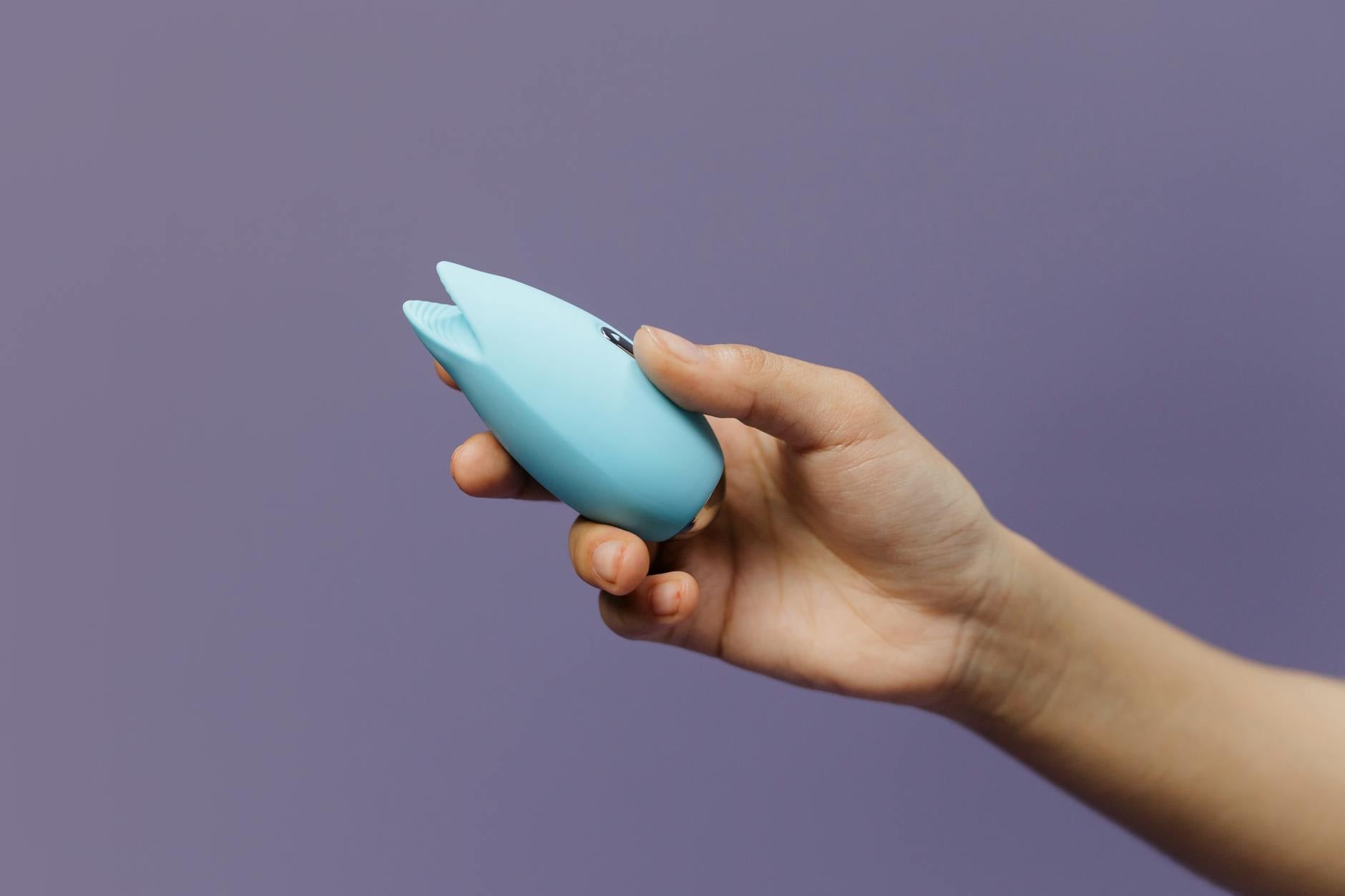
Let's start by naming what you're dealing with
A sensitive clitoris isn't a problem to solve. It's information. And the reason most vibrators feel awful on sensitive tissue isn't because you're broken. It's because traditional vibration is literally a hammering motion, and your clit is telling you it doesn't want to be hammered.
Here's the thing: clitoral sensitivity exists on a spectrum, and it shifts. Some people have always had sensitive tissue. Others develop it after hormonal changes, after taking certain medications, or after years of a particular kind of stimulation. Some experience it only at certain times in their cycle. The path forward is the same either way: you need a different tool and a different strategy.
Why standard vibrators feel overwhelming
Most vibrators on the market work through direct vibration. That means rapid, repetitive contact against your clitoris. For a sensitive clit, this feels like static feedback, rawness, or even pain. It's not a quirk. It's biomechanics.
Your clitoris has around 8,000 nerve endings packed into a tiny area. If those nerve endings are hypersensitive, they're firing on a lower threshold. Regular vibration crosses that threshold too quickly. You feel overstimulated before arousal even has time to build.
This is where air-suction vibrators change everything. Instead of vibrating directly against tissue, they create a gentle seal and pulse the pressure around your clitoris. No direct hammering. No rawness. The sensation is more like a rhythmic squeeze than a buzz.
If you've resisted vibrators because they've hurt in the past, a lemon vibrator or similar suction device often feels revelatory. It's not just less intense. It's a completely different category of stimulation.
The science of why suction works for sensitive clits
When air suction activates, it draws the clitoris gently into a chamber, then pulses that chamber open and closed. The sensation travels through deeper nerve pathways instead of surface ones. For sensitive people, this means stimulation that feels more diffuse and less sharp.
It also gives you control over intensity in a way vibration doesn't. With a traditional vibrator, you're choosing between "too much" and "way too much." With air suction, the lowest pattern is often genuinely gentle. Many models have 5-10 intensity levels, and levels 1-3 are often perfect for sensitive tissue.
Another advantage: suction tends to build arousal more gradually. Because the sensation is less immediately intense, your body has time to respond. Blood flow increases, tissues swell, and what felt uncomfortable at first often becomes intensely pleasurable a few minutes in. This is the opposite of traditional vibration, which can feel worse over time as sensitivity compounds.
How to actually use a lemon vibrator if your clit is sensitive
Start outside the shower, in a moment when you're genuinely relaxed. Not "supposed to be" aroused. Actually relaxed.
Apply a small amount of water-based lubricant around your clitoris, not inside the device. Lube reduces any sense of drag or friction, which matters more with sensitive tissue.
Hold the lemon vibrator at an angle, not directly over your clitoris. Let it make contact with the area around your clit first. Many people with sensitive clits find that indirect contact feels better than direct stimulation. You're not avoiding your clitoris. You're approaching it gradually.
Start on pattern 1 or 2. Seriously. The lowest setting. Spend 3-5 minutes here. Your nervous system needs time to recognize this as pleasure, not threat. If it still feels weird or uncomfortable, take a break. Try again tomorrow. Your clit isn't refusing pleasure. It's building trust with a new sensation.
Once pattern 1 feels comfortable, experiment with moving the device slightly. Side to side, up and down, very slowly. You're mapping out which positions and pressures feel best. This is exploration, not a race to the finish.
Many people with sensitive clits find that they can gradually increase intensity over 10-15 minutes, but only if they started low. If you forced intensity from the beginning, your clitoris will stay defensive. Start gentle and let arousal build the permission for more.
What patterns work best
Suction vibrators typically offer several patterns: steady pulses, waves, accelerations, or rhythmic on-and-off sequences.
For sensitive clits, I usually recommend starting with the steady pulse patterns rather than waves or accelerations. Waves can feel unpredictable. Accelerations can push too hard too fast. A simple, consistent pulse at low intensity gives your nervous system something steady to lock onto.
Once you're comfortable (and this might take a few sessions), you can explore other patterns. Many people find that alternating between two patterns during a session creates the best sustained pleasure. You're not constantly increasing intensity. You're varying sensation.
The patterns that feel best also change depending on where you are in your arousal curve. Early in a session, a steady low pulse works. Mid-way through, you might switch to something with a bit more rhythm. Near orgasm, a consistent medium-intensity pattern often works better than anything too variable.
The mental part of sensitive pleasure
Here's what I see most often in my practice: people with sensitive clits have often been told their sensitivity is an inconvenience. A partner made them feel slow. A previous toy made them feel broken. They've internalized that their clit is too difficult.
It's not. It's just specific.
When you first use a lemon vibrator, if you notice yourself rushing or tensing, pause. That's not arousal talking. That's the old narrative. Your sensitive clit doesn't need you to be patient. It needs you to believe that its sensitivity is actually a feature. Sensitive tissue often leads to intense orgasms. It also leads to full-body pleasure that people with less sensitive clits sometimes never access.
Give yourself permission to take 20 minutes. Give yourself permission to use the lowest setting. Give yourself permission to enjoy something that a partner or previous toy made you feel ashamed of.
If you're with a partner, let them know what you need. "I want to use this on my own first" is a complete sentence. You're not excluding them. You're building a foundation. Once you know what patterns and intensities feel good, showing your partner becomes easier. They get to watch you discover something that works, rather than troubleshoot something that doesn't.
When sensitivity might point to something else
Sensitive clits and painful clits can look similar from the outside, but they need different solutions. If stimulation causes sharp pain, burning, or a sensation that doesn't shift over time, that might be vulvodynia or another condition worth discussing with a gynecologist or pelvic floor specialist. Those require different tools and sometimes professional support.
If sensitivity is new and arrived with new medication, mention it to your prescriber. Some medications genuinely do change clitoral sensitivity, and sometimes there are alternatives.
If sensitivity is tied to anxiety, stress, or trauma, that's also useful information. Learning how to use a lemon vibrator when recovering from sexual trauma is a completely different conversation, and one that's worth having with both a therapist and a pleasure-positive gynecologist.
But if your clit is simply highly sensitive without pain, without numbness, and without a recent medical change. If it's been this way for years, or it's new but not painful. That's not a problem. That's a texture. And air-suction vibrators are often the best match for that texture.
FAQ: Sensitive clits and lemon vibrators
Why do clitoral vibrators hurt when my clit is sensitive?
Direct vibration creates rapid, repetitive contact against delicate nerve endings. For sensitive tissue, this crosses the threshold into overstimulation before pleasure has time to build. The sensation registers as rawness or pain instead of pleasure. Air-suction vibrators avoid this by creating gentle pressure changes rather than direct vibration, which feels dramatically different to sensitive clits.
Can I use a lemon vibrator if my clitoris hurts to touch?
It depends on the kind of pain. If touch causes sharp or burning pain that doesn't change over time, that's worth discussing with a healthcare provider before experimenting with any vibrator. But if your clit feels tender or oversensitive without burning pain, starting on the lowest settings with indirect contact often feels much better than you'd expect. Many people discover that gentle air suction is actually soothing to tender tissue.
How long does it take to get used to air suction on a sensitive clit?
Some people feel relief the first time they try it. Others need 2-3 sessions before their nervous system stops treating it as a threat. If you're in the second group, that's completely normal. Sensitivity often comes with a protective nervous system response. Consistent, gentle exposure helps your body learn that this sensation is safe. Patience is the tool, not the problem.
Should I use lube with a lemon vibrator if my clit is sensitive?
Yes. Water-based lube reduces any sense of drag or friction, which sensitive tissue benefits from. It also helps the suction seal work better. Apply it around the clitoris, not inside the device. A little goes a long way. Too much and the seal won't work. About a quarter-sized amount is usually right.
Can I orgasm with a sensitive clitoris and a lemon vibrator?
Absolutely. Many people with highly sensitive clits report their most intense orgasms come from air-suction vibrators because the sensation is so specific and so controllable. You're not fighting overstimulation. You're building arousal intentionally. That often leads to orgasms that feel deeper and more full-body than what you might experience with a traditional vibrator.
What if I want to use a lemon vibrator with a partner but my clit is sensitive?
Start solo first. Give yourself 3-5 sessions to figure out what patterns, intensities, and timing feel best. Then you have something to show your partner. You can say "I like this pattern at this level for about this long" instead of troubleshooting while they're watching. Once you know your own map, partnered use becomes easier and way more pleasurable. How to use a lemon vibrator when you want orgasms with a partner present walks through the conversation part.