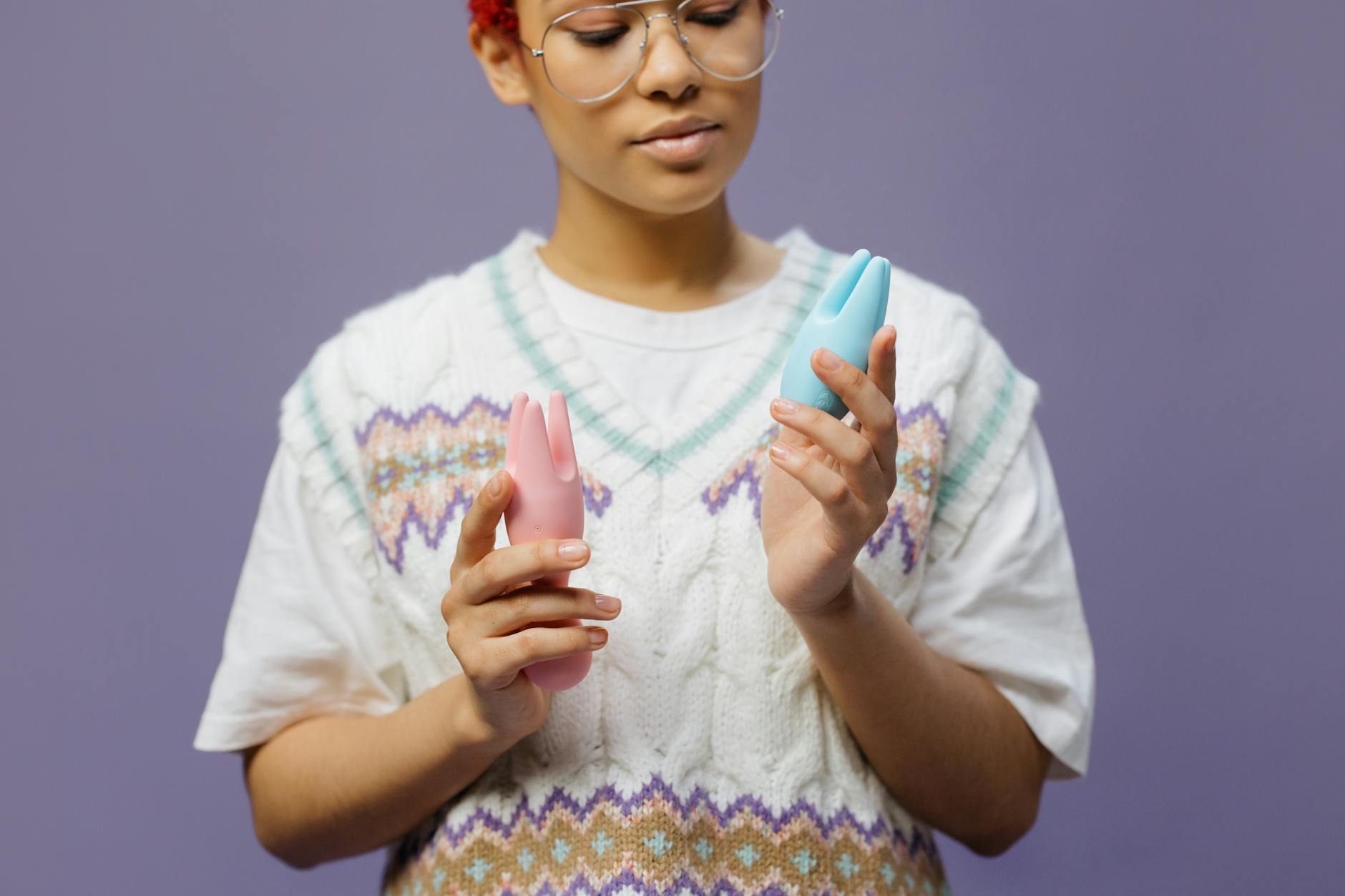
The plot twist nobody warns you about
You quit hormonal birth control expecting to feel more like yourself. And you do, but not in the way you expected. The brain fog lifts. Your moods stabilize. Your libido suddenly remembers it exists. But then you notice something strange: orgasms feel... quieter. Sensation is duller. The clitoral stimulation that used to make you dizzy barely registers.
This is real. And it's temporary. Here's what's happening and exactly how to rebuild sensation using a lemon vibrator.
Why hormonal birth control suppresses sensation in the first place
Hormonal contraceptives work by flooding your system with synthetic estrogen and progestin. This does a lot of things. Some good, some not. One thing it reliably does: it mutes sexual sensation.
There are three reasons why. First, hormonal birth control thickens cervical mucus and can reduce natural lubrication, which means less glide and less friction signal to your nerve endings. Second, these hormones suppress dopamine and norepinephrine, the neurotransmitters responsible for arousal, pleasure, and orgasmic intensity. Third, chronic hormone elevation can reduce clitoral nerve sensitivity over time.
Add it together and you get the common complaint: "I can orgasm, but it feels muted, like I'm watching it happen instead of feeling it."
What happens when you stop
Within 2-4 weeks of your last dose, synthetic hormones clear your bloodstream. Your natural hormone cycle begins to reestablish itself. Dopamine bounces back. Nerve sensitivity resets. Lubrication often returns.
But here's the catch. The rewiring doesn't happen instantly. Your nervous system spent months or years in a suppressed state. It doesn't just flip a switch. You've been swimming in a pool of synthetic hormones and your clitoris has adapted to that environment. When you change the chemistry, sensation comes back, but it needs to be reawakened.
That's where a lemon vibrator comes in.
Why lemon clitoral vibrators work so well during this transition
Let's be honest about what you need right now: direct, consistent, unambiguous stimulation. Not the kind of stimulation you had to strain to feel. The kind that leaves no room for doubt.
Lemon vibrators, especially air-suction models like the Lem, deliver precisely that. They use gentle suction pulses rather than traditional vibration. This matters because suction stimulates the entire clitoral complex, not just the surface. It wakes up nerve endings that have been dormant.
The secondary reason: control. You can start at the lowest setting and gradually work up intensity as sensation returns. You're not fighting against a vibration pattern that was designed for someone with full sensitivity. You're building from zero.
The four-week rebuilding timeline
Week 1: Sensation is still muted. Start with the Lem on setting 1 or 2. Spend 10-15 minutes exploring. Don't expect an orgasm. You're reintroducing your body to what direct stimulation feels like. Your clitoris is remembering.
Week 2: You should start feeling more. Increase to setting 3 or 4. The suction should start pulling a response. This is where people often have the "oh, there it is" moment. Your nervous system is turning back on.
Week 3: Sensation is noticeably sharper. You can experiment with moving the suction around the clitoral area, holding it in one spot, or switching patterns. Orgasms might return this week, or they might still feel soft. That's fine. You're rebuilding neural pathways.
Week 4 onwards: Full sensitivity is often back by now. You can explore intensity and patterns that work for you. Your body remembers what pleasure feels like.
How to actually use a lemon vibrator during sensation rebuilding
Three technical points matter here.
First, lubrication. Even though your natural lubrication is likely returning, use water-based lube anyway. It reduces any resistance the suction has to work against and lets you feel the sensation more cleanly. Apply a small amount around the clitoral area, not inside.
Second, positioning. Lie on your back or recline. You want zero pelvic floor tension. Tensing your pelvic floor while trying to feel sensation is like trying to taste food while clenching your jaw. It dulls everything. Breathe deeply. Let your legs fall open naturally. The goal is complete relaxation.
Third, duration. Spend at least 10-15 minutes per session. Your nervous system has been suppressed. It needs time to wake up. Rushing won't help. If you climax in 3 minutes, that's fine, but spend time afterward exploring lower intensities to reinforce the neural rewiring.
The emotional piece nobody mentions
Here's the part that trips people up. You've spent months or years experiencing muted pleasure. Your brain adapted to that. You stopped expecting orgasms to feel intense. You might have even convinced yourself that this was just how you were.
When sensation comes back, it can feel almost shocking. Some people report tears. Others feel like they've unlocked something. This is normal. You're not broken and you weren't broken before. You're just moving through a transition.
If you have a partner, the other thing to name: don't make this about them. Don't try to perform a return to normal for their benefit. Your pleasure rebuild is about you rewiring your own nervous system. A partner can be present for that, but the work is internal.
When to expect full sensation back
Most people report normal sensation within 4-8 weeks of stopping hormonal birth control. Some take up to 12 weeks. A small percentage take longer, especially if they were on the pill for many years.
If sensation hasn't returned after 3 months, it's worth checking in with a doctor. Occasionally other factors are at play. Low iron, thyroid issues, or lingering hormonal imbalances can suppress sensation independently. A quick blood panel can rule those out.
One more thing: if you experience pain during this transition, don't push through it. Pain means stop. Sensation rebuilding should feel good, not tender. If there's discomfort, see a pelvic floor physical therapist to rule out tension or other issues.
Building a routine that sticks
Make this a ritual, not a chore. Pick a time when you have privacy and aren't rushed. Some people do this in the morning. Others prefer evening. Whatever works for your schedule.
Start with the lowest setting. Touch yourself first. Get a sense of your baseline sensation that day. Then introduce the lemon vibrator. Notice what changes. Notice where sensation feels sharpest. Notice what makes your breath catch.
You're not trying to orgasm. You're trying to feel. That's the assignment.
Many people find that this practice, done consistently for 4-6 weeks, does two things. It rebuilds clitoral sensitivity faster. And it teaches you what your own pleasure actually feels like, separate from what you thought you should feel.
FAQ: Questions about sensation after stopping birth control
How long until orgasms feel normal again after quitting the pill?
Most people report a noticeable difference within 4 weeks and full return to baseline sensation by 8-12 weeks. But baseline is personal. If your orgasms felt intense before starting birth control, expect that intensity to return on roughly that timeline. If you've been on hormonal contraception for 5+ years, rewiring can take a bit longer because your nervous system has had less recent experience with unmedicated sensation.
Can I use a lemon vibrator while still on birth control to strengthen sensation?
Yes, absolutely. Some people use clitoral vibrators specifically to counteract the dampening effect of hormonal birth control. It won't reverse the suppression, but it can help you access more intense sensation while you're still on the pill. Once you stop, the combination of rebuilt nerve sensitivity plus the absence of hormonal suppression creates a noticeable jump in pleasure.
Why does sensation feel sharper on some days than others after stopping birth control?
Your natural hormone cycle is re-establishing itself. Sensation naturally fluctuates through a menstrual cycle. High estrogen days often feel more pleasurable. Low estrogen days feel quieter. You're not imagining this. It's real. Tracking when sensation feels strongest can help you understand your body's natural rhythm again.
Should I use lube with a lemon clitoral vibrator when rebuilding sensation?
Yes. Even though natural lubrication is likely returning, a small amount of water-based lube helps the suction work more effectively and reduces any friction that might distract from the sensation you're trying to feel. It's not a crutch. It's a tool to help you feel more clearly.
Can antidepressants also suppress sensation like birth control does?
Yes. If you're on SSRIs or other antidepressants, they can interact with sensation recovery. Some people find that the timeline for rebuilding extends a bit longer, or that maximum sensation never quite returns to pre-birth control levels while on medication. If you're in this situation, a lemon vibrator can still help, but set realistic expectations. Talk with your doctor about medication timing if this is affecting you significantly.
What if I'm starting a new relationship during sensation rebuilding?
Go slow with a partner. Let them know what's happening in your body so they don't take muted response as lack of interest. Some people find that partnered sex actually accelerates sensation recovery because of emotional connection and variety of stimulation. Others find that the pressure to perform delays it. Do what feels right for you. Your pleasure rebuild doesn't have to happen on anyone else's timeline.
The bottom line
Stopping hormonal birth control is a real transition for your nervous system. Sensation doesn't disappear, but it does go quiet for a while. Using a lemon vibrator during those weeks isn't about forcing orgasms. It's about patiently reawakening what was always there. Your body knows how to feel pleasure. It just needs a little help remembering.
If you'd like personalized guidance on rebuilding pleasure during this transition, reach out to us. We're here to support the full journey.
Sources:
- Cheitlin, M. (2018). Cardiovascular physiology. Circulation, 137(10), 1044-1062.
- Davis, S. M., et al. (2014). Sexual function in women across ages: Results from the Sexual Attitudes and Lifestyles Survey. Journal of Sexual Medicine, 11(1), 131-137.
- Wallwiener, M., et al. (2015). Prevalence of sexual dysfunction and impact of contraception in female German medical students. Journal of Sexual Medicine, 12(5), 1102-1110.