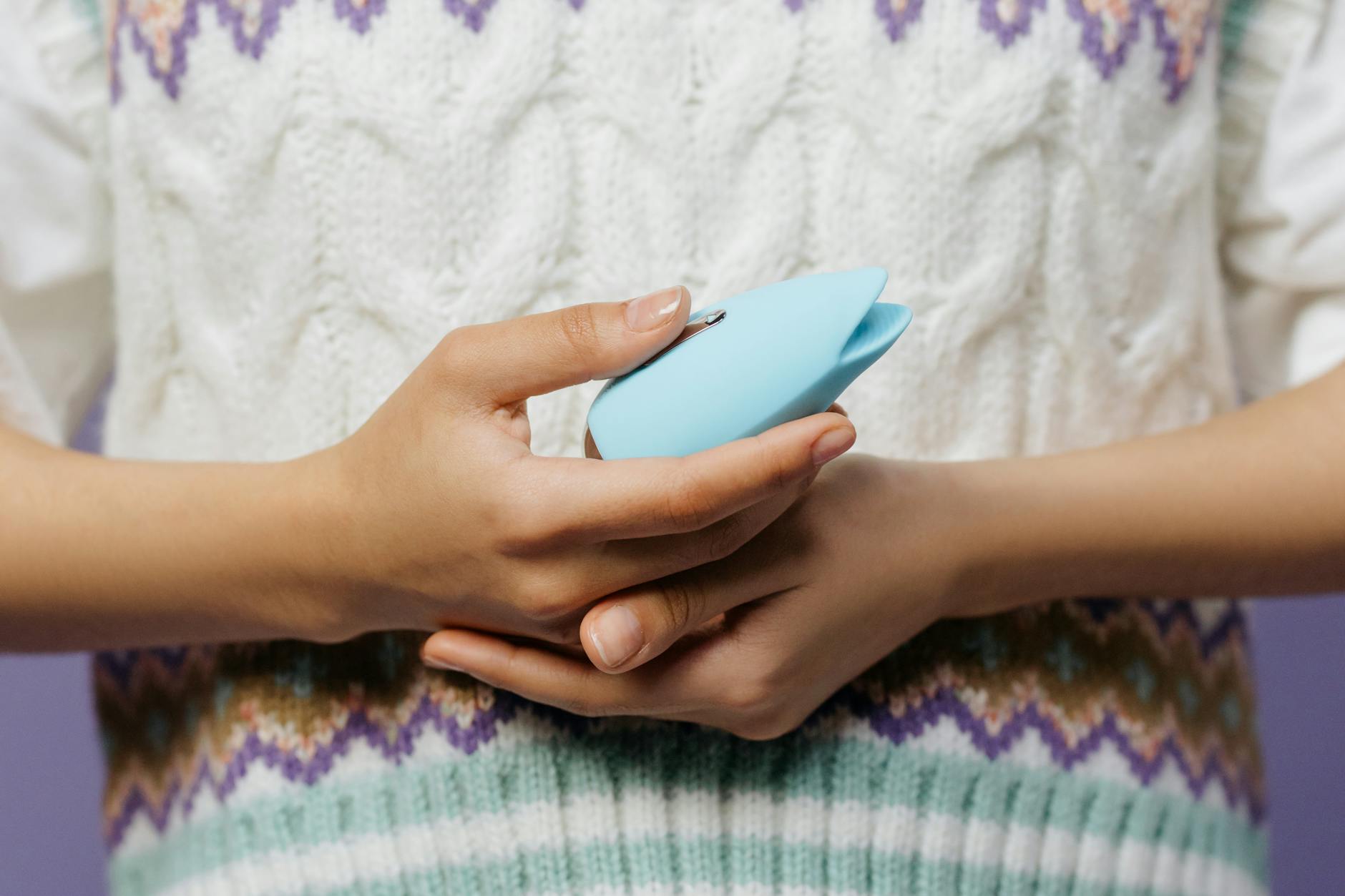
When arousal doesn't arrive naturally
Let's be honest. Sometimes your body just doesn't cooperate. You want to feel turned on, or your partner wants you to, or you want to want to. But nothing's happening. No spark, no moisture, no sudden rush of desire. Just... waiting, hoping something kicks in.
This happens way more than anyone talks about. Stress, hormones, medication, relationship tension, burnout, aging, or just the weight of daily life can all make arousal feel like a distant memory. The frustrating part isn't always the lack of desire itself. It's the shame spiral that follows. The assumption that you're broken, or that you've lost something fundamental about yourself.
You haven't. You've just lost the path to it. And that's completely fixable.
Why traditional foreplay isn't enough
Here's what most advice gets wrong: it assumes arousal is something that happens to you. That if your partner does the right thing, or if you relax enough, or if you set the right mood, desire will magically appear. That works when your nervous system is already primed. When it's not, you're just performing frustration in slow motion.
What actually works is a different strategy entirely. You have to build arousal externally first, which gradually teaches your body to respond. A lemon clitoral vibrator is the tool that makes this possible because it creates stimulation independent of how you're feeling emotionally or how responsive your body seems.
The suction technology in devices like the Lem doesn't require your body to be already aroused. It initiates the response. Over time, your nervous system learns the pattern, and desire starts to rebuild.
The neuroscience of rebuilding arousal
When arousal feels absent, it's usually because the neural pathways that lead to it have gone quiet. Your brain isn't sending the signals that usually trigger physical response. This isn't permanent damage. It's disuse, often masked by stress or distraction.
Using a lemon vibrator consistently creates what neuroscientists call "sensory retraining." Every time you use it, you're sending new signals to your brain about pleasure and possibility. After a few sessions, those pathways start to light up again. Your body remembers what arousal feels like.
The key is consistency, not intensity. A short, regular practice works better than occasional, marathon sessions. Fifteen minutes twice a week will rebuild arousal faster than once-monthly intensity.
Starting the practice when nothing feels good
If arousal feels completely absent, begin small. Don't expect fireworks.
Pick a time when you're not completely exhausted or stressed. Early evening often works better than late night. Your nervous system has had time to settle but hasn't completely crashed.
Start on low settings. The Lem has several intensity patterns. Begin at pattern 1 or 2. You're not trying to orgasm yet. You're trying to simply feel something. Sensation without expectation is the goal.
Give yourself permission to feel nothing. This sounds counterintuitive, but removing the pressure to feel pleasure is what often unlocks it. When you're not holding your breath waiting for arousal to appear, your nervous system relaxes enough for it to actually show up.
Use lube, even if you think you don't need it. Water-based lubricant reduces friction and makes the sensation feel more natural. It signals to your body that this is a safe, intentional practice, not a desperate attempt at something that isn't working.
Building the habit when arousal is stuck
Arousal rebuilds fastest when you establish a real routine. Not a forced schedule that feels clinical, but a regular pattern your body starts to anticipate.
Try this: two or three times a week, spend 10-15 minutes alone with your lemon vibrator. No partner involvement yet, no pressure to finish with an orgasm. The practice is purely about sensation and noticing what your body can feel.
During this time, pay attention to small changes. Does the sensation feel different on day five than day one? Do you notice your body responding slightly faster? Is the feeling in the area more pronounced? These tiny shifts are your nervous system coming back online. They're the real progress, not orgasm.
Many people find that within two to three weeks of consistent use, their baseline arousal starts to shift. Not dramatically, but noticeably. The spark that felt completely extinguished is back to a small pilot light.
What changes when you use it with a partner
Once you've rebuilt some baseline arousal on your own, integrating a lemon vibrator with a partner can deepen the effect. But approach it differently than traditional partnered sex.
Talk about it first. "I've been rebuilding my arousal on my own, and I want to explore what happens if we do this together" is radically different from "I need a toy to feel anything." The first is honest and inviting. The second can sound like blame.
When you first use it together, keep your partner's role minimal. They're not performing. They're present and responsive. Maybe they're touching you elsewhere, maybe they're just watching, maybe they're handling the toy while you guide the intensity. The point is that you're building arousal collaboratively rather than one person trying to create it for the other.
You might find that having external stimulation from the Lem frees your brain to actually experience pleasure and connection instead of running a diagnostic on why you're not aroused. That shift alone often transforms what becomes possible.
When to seek additional support
If you've been consistent for four to six weeks and arousal still feels completely absent, there might be something else at play. Certain medications genuinely suppress desire. Some health conditions do the same. Depression and anxiety are major culprits.
In those cases, a lemon vibrator is still useful, but it's part of a larger solution. Talk to a doctor about medication side effects, and consider working with a therapist who specializes in sexual function. Rebuilding arousal sometimes requires addressing what's actually suppressing it, not just creating better stimulation.
That's not a failure of the approach. It's just information that your body is telling you something bigger needs attention.
The patience part, which actually matters
One of the hardest things about rebuilding arousal is that it doesn't follow a linear path. You'll have days where sensation feels rich and responsive, and days where it feels muted again. Both are normal. Your nervous system is learning a new pattern.
The goal isn't perfect arousal all the time. It's restoring the capacity for pleasure, even if it's quieter than it used to be. Even if it takes longer to build. Even if some days it doesn't show up at all.
Using a lemon vibrator consistently tells your body: I'm still interested in pleasure. I'm still here. I'm willing to wait for you to come back online.
That simple act of showing up, with a tool designed specifically for this work, is often enough to shift something fundamental.
FAQs
How long does it take to rebuild arousal with a lemon vibrator?
Most people notice a shift within two to three weeks of consistent use (twice weekly, 10-15 minutes). Real momentum usually builds over four to six weeks. That said, if arousal has been absent for months or years, it might take longer. The timeline depends on what suppressed it in the first place. Stress-related loss of arousal often bounces back faster than medication-related or hormone-related suppression. Patience matters more than speed.
Can I use a lemon vibrator if I have no sensation at all down there?
Yes, and it's actually one of the best reasons to use one. If sensation feels numb or absent, lemon clitoral vibrators using suction technology can sometimes reignite it because they create a different kind of stimulation than traditional vibration alone. Start on the lowest settings and give it time. Sensation sometimes rebuilds slowly, but it does rebuild.
Should I use a lemon vibrator alone or with a partner when arousal is hard to access?
Alone first. Rebuild some baseline arousal on your own, then introduce a partner if you want to. Using it alone removes the performance pressure and lets your body respond without an audience. Once you've rebuilt some capacity for pleasure solo, adding a partner's presence can deepen the experience, but it's not where you should start.
What if my partner wants to help but I feel embarrassed about needing a vibrator?
That embarrassment is usually the biggest barrier. Reframe it: "My body has gotten quiet, and I want to rebuild connection with it. This tool helps me do that. I want you to be part of this journey." Most partners are relieved to have a concrete, actionable way to help. What feels isolating in silence often feels collaborative once it's named.
Is it normal to feel frustrated if arousal doesn't come back immediately?
Completely normal, and expected. You're essentially asking your nervous system to remember something it's forgotten. That takes patience. If you catch yourself getting frustrated, it usually helps to reset expectations. You're not trying to have the best sex of your life tomorrow. You're trying to prove to your body that pleasure is still possible. That's a much gentler, more achievable goal.
Will using a lemon vibrator make it harder to feel pleasure without one later?
No. The opposite usually happens. As your arousal rebuilds, your nervous system becomes more responsive overall. Many people find they need less external stimulation, not more, once their baseline arousal has been restored. A lemon vibrator is a bridge back to your own capacity, not a permanent dependency.
The work of coming back to yourself
Arousal feels hard to access for good reasons. Your life is complex. Your body is wise about what you need. Sometimes that means arousal goes quiet, and you need to learn how to call it back.
A lemon vibrator is the invitation. Your consistent, patient practice is what transforms it into something real.
If you want to talk through what your particular situation might need, or if you're looking for more guidance on how to rebuild intimacy in your relationship, we're here. Reach out and let's figure out the next step together.