
Let's be real about the hand thing
Your fingers are the best tool you've ever used. They respond to what your body needs in the moment. They adjust pressure, speed, and angle instantly. They never buzz when you don't want them to.
So the idea of switching to a toy can feel like you're trading intimacy for... novelty? A shortcut? Something less you.
Here's the thing. A lemon vibrator isn't meant to replace that knowledge. It's meant to amplify it. It's your hands plus an extra dimension. And the transition is way easier than you think if you go in knowing what to expect.
Why the jump feels weird at first
When you've relied on manual stimulation for years, your body has built a specific map of what works. You know the exact pressure that makes you breathe differently. You know the rhythm that builds toward an orgasm versus the one that feels nice but goes nowhere. That's data living in your nervous system. A lemon vibrator feels foreign because it's not responding to that map yet.
There's also a psychological piece. Manual stimulation feels meditative, intimate, self-directed. Toys can feel performative or like you're "doing it wrong" somehow. That's not true, but the feeling is real, and pretending it isn't just makes the transition harder.
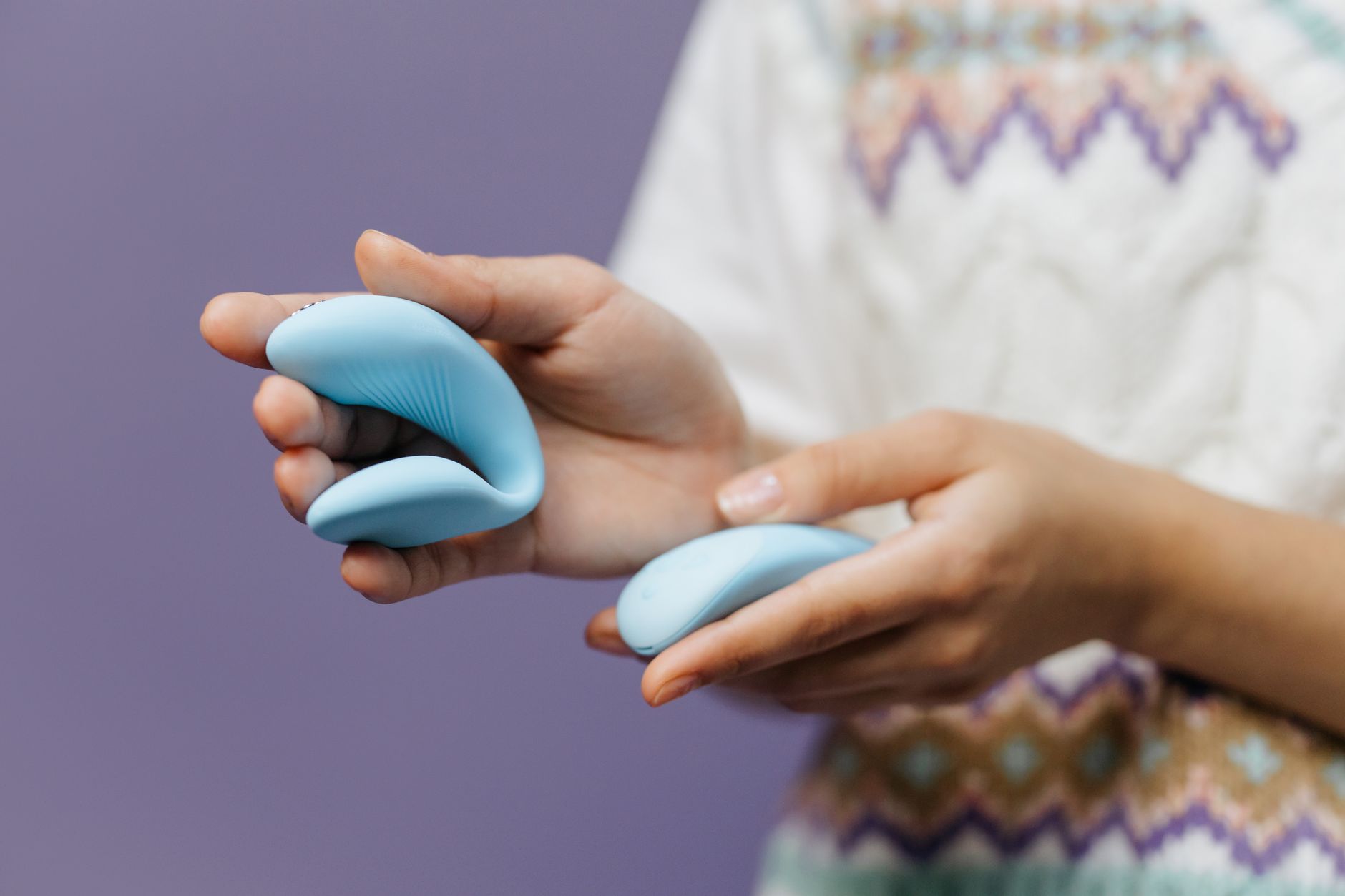
Photo by cottonbro studio on Pexels
Start with the lemon vibrator OFF
I mean it. The first time you hold a lemon clitoral vibrator, leave it off entirely. Use it exactly as you would your fingers. Feel the shape, the weight, how it sits in your hand. Explore your anatomy with it as the tool instead of your fingers. This sounds overly cautious, but it completely rewires the "this is weird" response.
You'll probably find that the rounded tip of a lemon vibrator actually feels good even without vibration. The suction-cup design is different from a pointed toy. It's broad, gentle when it's not activated. Spend three or four solo sessions just exploring this way.
Why? Because you're building a new tactile vocabulary before adding sensation into the mix. Your nervous system gets used to the toy being a normal part of the experience rather than an interruption of it.
Introduce vibration at the lowest setting
Once you're comfortable holding and moving the lemon vibrator without any power, turn it on at setting 1. For most clitoral vibrators, this is barely noticeable. You might actually feel less sensation than you do with firm finger pressure.
Here's where people usually mess up: they expect the vibrator to do the work. They hold it still, waiting for it to make something happen. That's not how your hands worked, so don't expect it to work that way now.
Instead, use the vibrator like you used your fingers. Move it. Circle it. Use it with intention and attention. The vibration amplifies what you're already doing, it doesn't replace the doing.
Try this approach for at least three sessions before moving to a higher setting. Your clitoris needs time to register that this new input feels good, not just different.
The pressure question
One of the biggest surprises for people switching from manual to a lemon vibrator: you likely need less direct pressure than you think. Fingers naturally apply a fair amount of force. Vibrators work better with lighter touch. Your instinct will be to press the lemon vibrator in the same way you press with your fingers, and that often feels overwhelming or numb-making.
Try holding the vibrator so it's barely making contact at first. Let the vibration do the work. You can always increase pressure, but once you've numbed the area with too much force, you've basically reset the session.
That said, some people do prefer more pressure through a toy than they do manually. You'll know within a few sessions which camp you're in. There's no right answer, just your answer.
The multi-tasking thing
One reason people love their fingers is because they can use both hands, or incorporate fingers elsewhere while stimulating the clitoris. A lemon vibrator occupies one hand. This can feel restrictive at first.
Solution: use your other hand. Penetrate with fingers if that feels good. Touch your breasts. Hold the vibrator with less grip tension and let your hand stay relaxed. You have more agency here than you think. Some people who switched to toys found they actually had more pleasure available because they could do more simultaneously.
Why a lemon vibrator specifically
The Lemon is designed with a wide, rounded suction tip. Unlike pointed vibrators, it spreads sensation across a broader area of the clitoris, which means it's less likely to cause numbness or overstimulation. For someone transitioning from hands, this matters. Your fingers worked a larger surface area. A lemon vibrator mimics that pattern better than a narrow, pointed toy would.
The suction mechanism also creates a sensation that's genuinely different from vibration alone. It's closer to the kind of sustained pressure you can create manually, but with added sensation underneath. This can make the transition feel more continuous.
The arousal prerequisite
This one's critical and people skip it constantly. You cannot test a vibrator when you're not already aroused. When you're barely turned on, everything feels wrong. The vibration feels buzzy instead of pleasurable. The toy feels cold and foreign. You judge the whole experience as "not for me" and quit.
Have your first few sessions with the lemon vibrator when you're already warmed up. Spend ten minutes with your fingers first. Get your body into that place where touch feels really good. Then introduce the toy. Your nervous system will actually recognize it as an addition to pleasure rather than an interruption of it.
Mental permission is half the battle
When you've relied on your own hands for years, using a toy can feel like you're admitting your hands weren't enough. That's the opposite of what's actually happening. You're just exploring another dimension of sensation available to you.
I tell my clients this: your hands aren't going anywhere. Even once you love a lemon vibrator, manual stimulation will still feel good. They're not in competition. This is about expanding your baseline, not replacing what worked.
For some people, the transition takes two weeks. For others, it takes two months. That's fine. You're not on a schedule. The goal isn't to fall in love with toys. The goal is to not dismiss them because the first experience felt weird.
Common hiccups and how to fix them
"It feels numb making after a few minutes." You're using too much pressure or the setting is too high. Drop to setting 1 and use barely-there contact. Arousal, lightness, and patience are the fix here.
"I can't get used to the buzzing feeling." Some people genuinely prefer other sensations. That's valid. But also try moving the toy more instead of holding it still. Movement changes how the vibration registers.
"It's not as good as my fingers." Probably true right now. Hands have years of practice. Give it time. Most people find that once they adapt, toys offer sensations hands simply can't match.
"I feel self-conscious using it." Totally normal. You're allowed to feel weird about new things. Acknowledge it and proceed anyway. The self-consciousness usually fades within a week or two of regular use.
What happens after the transition clicks
Most people who stick with it for four to six weeks hit a point where a lemon vibrator suddenly feels great. Not because the toy changed. Because your nervous system finally registered it as a normal, pleasurable part of your experience.
After that, many people discover they can orgasm faster, more intensely, or with less effort than they could with hands alone. Others find that the toy helps them access different types of sensation or orgasm. Some keep using both interchangeably depending on mood or circumstance.
All of those outcomes are real. And they're all available to you if you approach the transition with patience instead of judgment.
People also ask
Will using a lemon vibrator make my fingers feel like they stop working?
No. Vibrators and fingers create different sensations. Once you're familiar with a lemon clitoral vibrator, your fingers won't suddenly feel numb or boring. Many people switch between both depending on what they're in the mood for. Your sensitivity to manual touch doesn't disappear just because you've added a toy to your repertoire.
How long should I wait before turning on the vibrator?
There's no set timeline, but most people benefit from at least three sessions with the lemon vibrator turned off before introducing vibration. This gives your brain time to normalize the toy as a tool rather than an intrusion. Start with setting 1 when you do activate it, and stay there for several sessions before exploring higher settings.
Can I use a lemon vibrator with a partner?
Absolutely. In fact, some people find the transition easier with a partner present because it removes the self-consciousness element. A partner can hold the toy while you guide them on pressure and movement, which mimics how you'd use your hands. If you're considering this, talk about it first so there's no surprise during the experience.
What if I hate it and want to return to just fingers?
Then stick with your fingers. Toys aren't mandatory. Some people try them, don't love them, and move on. That's a complete and valid experience. The goal isn't conversion to toy use. It's giving yourself the option to explore if you want to.
Should I use lube with a lemon vibrator?
Water-based lubricant can help, especially if you're new to the toy and want to reduce friction. It's not required, but it can make the experience smoother and more comfortable. Avoid silicone-based lubes with silicone toys, as they can degrade the material over time. A small amount of water-based lube during your first few sessions can ease the transition and make the sensation feel less foreign.
Is there a difference between clitoral vibrators and other toys for this transition?
Yes. Clitoral vibrators like the lemon are designed specifically for external stimulation and usually offer broader, less intense sensation than toys designed for penetration. For someone transitioning from fingers, a clitoral vibrator is usually the better starting point because it works with the same anatomy you've been stimulating manually. You're adding sensation, not changing the entire mechanism.
You're not giving up anything
Switching from fingers to a lemon vibrator doesn't mean you're abandoning something good. It means you're curious about what else might feel good. That's it. Some people add toys to their pleasure toolkit and never look back. Others try them once, feel neutral, and return to what they knew. Both choices are okay.
The only failed attempt is the one where you give up after the first session because it felt weird. Give yourself permission to feel weird for a little while. Your nervous system will catch up. And if it doesn't, well, your hands will still be there, exactly as capable as they always were.
Ready to explore? Start with the off button. Everything else follows from there.