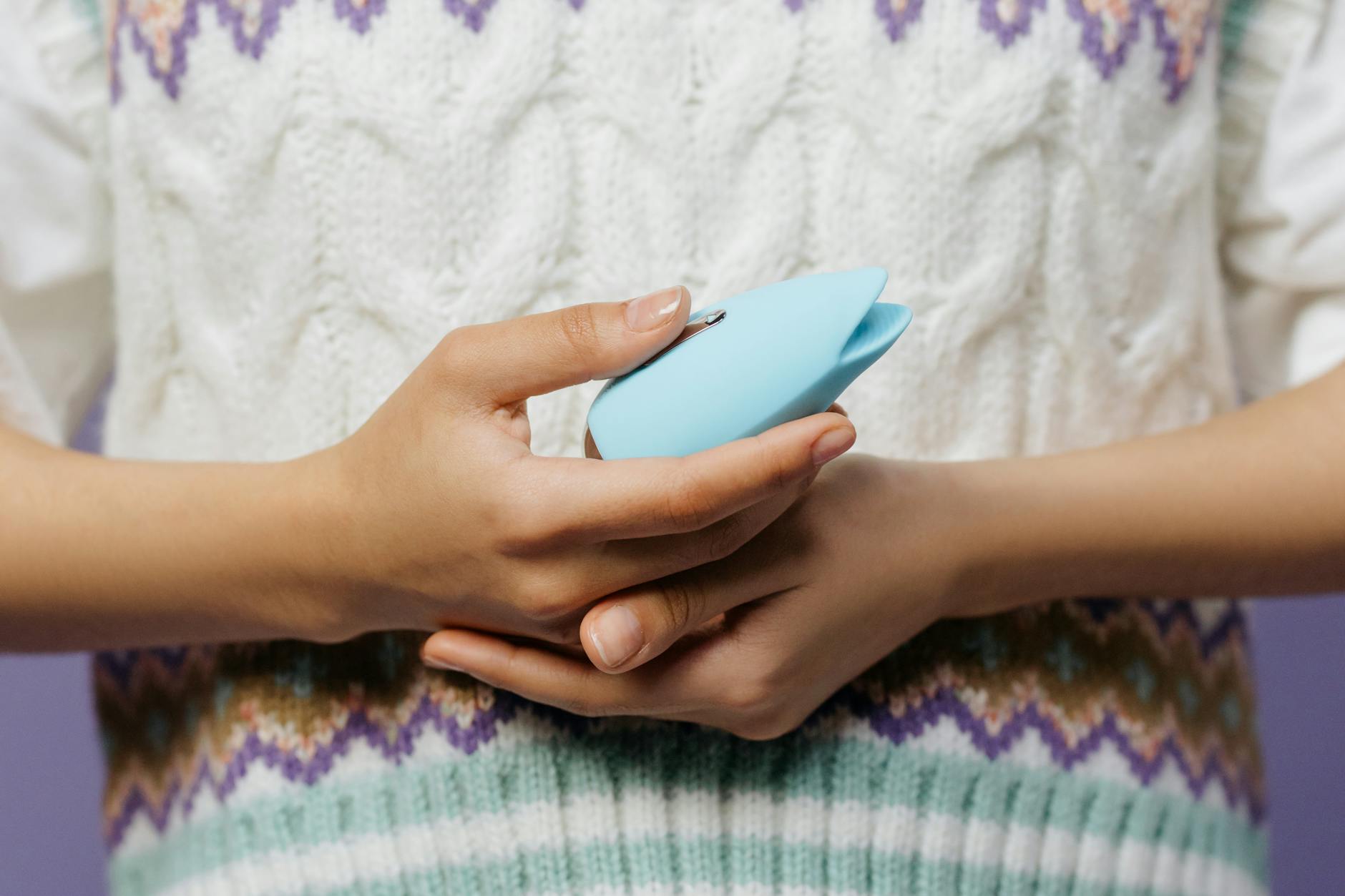
Here's the thing about switching to a toy
Your hands have been doing this for years. They know the exact pressure, rhythm, and angle that works. So when you pick up a lemon vibrator for the first time, the instinct is to compare it directly to what your fingers do. That's like comparing a guitar to a piano and calling one "better" because it's not a guitar. They're different instruments.
The transition isn't about abandoning what works. It's about adding a different sensation to your toolkit. And honestly? Most people who say they "can't use toys" haven't given their brain time to map what the new sensation feels like.
Why the switch feels awkward at first
Your nervous system has learned a specific pattern. When you touch yourself manually, the sensation builds gradually. Pressure increases, you adjust your hand position, your brain predicts what comes next. It's a feedback loop.
A clitoral vibrator, especially a lemon sucker like the Lem, introduces something your body hasn't registered before. Suction plus gentle pulsing doesn't feel like finger pressure. Your brain notices the difference, sometimes interprets it as "wrong," and switches off.
This is completely normal. It's not that you can't enjoy toys. Your nervous system just needs time to classify the new sensation as pleasurable instead of unusual.
Start with observation, not pleasure
Don't put the lemon vibrator near your clitoris on day one. Seriously. Buy it, hold it, feel the weight. Turn it on in your hand. Notice how the suction feels on your fingertip. Does the pulse pattern remind you of anything? Does the weight feel nice or awkward?
This sounds silly but it's the difference between your brain treating the toy as foreign or familiar. You're downshifting the stakes. You're not trying to get off. You're just getting acquainted.
Many people skip this step and jump straight to sex. Then they're nervous, the toy feels weird, and they conclude vibrators don't work for them.
The integration path
Once you've played with the toy on its own, try this progression:
Step 1: Use your hands first. Get yourself aroused using whatever you've always done. No vibrator. Just hands. Build arousal to about 60 or 70 percent. You want to be turned on but not at the edge.
Step 2: Introduce the toy at low intensity. Switch to the Lem on pattern 1. Hold it just off your clitoris, not directly touching. Let the air pulsations brush against you. This is way less intense than direct vibration. It gives your nervous system a gentler introduction.
Step 3: Move it around. Use the toy like you'd use your hand. Explore. The clitoral complex is large. The tissue around the glans is sensitive in different ways than the glans itself. A lemon clitoral vibrator works differently on different parts of your anatomy.
Step 4: Switch back to hands if needed. If the toy feels weird, drop it. Go back to what works. There's no medal for forcing yourself to finish with something that doesn't feel right. Your goal is to teach your brain that toys are optional, not mandatory.
What your hands bring that toys don't (and why that matters)
Manual stimulation has temperature. Your hands are warm. Your fingers have texture. There's friction and resistance. You can feel your partner if they're touching you. The whole experience is tactile in a way toys can't replicate.
This is why some people think they prefer manual stimulation. They're not wrong. But they're often comparing manual play without toys to their best manual play without toys. That's a rigged comparison.
The real question is: what does a lemon vibrator add to manual play, not what does it add to manual play alone. Use the toy with your hands. Put one hand on the Lem while you use the other hand on other parts of your body. Layer sensations. This is where toys become genuinely useful, not as a replacement but as an enhancement.
The sensation mapping work
If you've always used fingers, you know what direct pressure on your clitoris feels like. You know what side-to-side motion feels like. You know your orgasm threshold.
With a lemon sucker, you're learning new sensations. The suction creates a different kind of pull. The pulsing patterns add variety your hands can't create. Some people find this feels more intense. Others find it more diffuse.
Take notes, honestly. After a few sessions, you'll start mapping what works. Pattern 3 on the Lem might feel good while patterns 1 and 2 feel too subtle. Or you might discover that holding it slightly off your clitoris is more pleasurable than direct contact. This is useful information. Your brain is learning.
When to bring a partner into the switch
If you're in a relationship, your partner seeing you use a toy for the first time might feel loaded. Will they think you're not satisfied with them? Will the toy feel like competition?
It helps to frame it clearly. "I'm learning what this feels like. It's separate from what we do together." Because it is. Manual stimulation with a partner isn't the same as solo exploration with a toy. Different contexts, different goals.
If your partner is curious, let them help. Sometimes having someone else hold the toy while you direct them is a good middle ground. You're still in control. They're not watching you struggle alone. And if it feels awkward, you can laugh about it together.
The patience part (yes, it matters)
You didn't wake up at age 15 knowing exactly how to touch yourself. You learned through trial and error. Same thing applies here. Give yourself at least five or six sessions before deciding a lemon clitoral vibrator doesn't work for you.
Sessions where nothing happens are data. Sessions where it feels okay but not amazing are data. You're training your nervous system to recognize pleasure in a new package. That takes time.
Most people who stick with the transition report that by session three or four, the toy stops feeling foreign. By session six, they've usually found at least one pattern or positioning that feels genuinely good. By session ten, they're often wondering how they ever enjoyed pleasure without it.
The goal you're actually after
You're not switching from manual to toys. You're expanding your range. Your hands will always be part of your pleasure. But now you have options. Sometimes you want the warmth and intimacy of your own touch. Sometimes you want the consistent pressure of the Lem. Sometimes you want both, layered together.
This flexibility is the actual win. Not replacing what works. Adding to it.
Frequently Asked Questions
How long does it take to enjoy a lemon vibrator if you're used to manual stimulation?
Most people report that the sensation stops feeling foreign by session three or four. That doesn't mean you'll orgasm on day one. But you'll stop thinking, "What is this weird feeling?" and start thinking, "Oh, that's interesting." Full integration, where the toy feels as natural as your hands, usually takes 6-10 sessions. Everyone's timeline is different. Patience is the variable that matters most.
Is it normal to feel numb when you first try a clitoral vibrator?
Yes. If you're not aroused enough when you introduce the toy, or if the intensity is too high for your current state, numbness is common. Dial back the intensity. Spend more time on manual arousal first. Make sure you're actually turned on before bringing the toy into play. Numbness usually means the stimulation is either mismatched or premature in your arousal curve.
Can using a lemon vibrator make it harder to enjoy manual stimulation?
Some people worry that adding vibration will desensitize them to hands-only touch. The research on this is mixed, but clinically most people don't experience this. What actually happens is your nervous system learns to value both. You might find that you prefer vibration for certain types of orgasms and manual touch for others. That's normal neural adaptation, not desensitization.
What's the difference between using a lemon vibrator alone versus with a partner?
Solo use lets you explore without performance pressure. You can experiment with patterns and positioning at your own pace. With a partner, you're managing both your arousal and theirs, plus the emotional weight of them watching you learn. Neither is better. They're just different contexts. Many people find it helpful to do the initial exploration solo, then bring a partner in once they know what they like.
Why do some lemon adult toys feel more natural than others?
Different toys introduce sensation in different ways. A lemon clitoral vibrator uses suction, which is less direct than traditional vibration. This makes the sensation less intense and often easier to integrate if you're coming from manual-only play. The Lem's pulsing patterns are also gentler than high-frequency vibrators, which can help during the transition phase. Gentler intensity often means easier adaptation.
How do I know if I actually like the toy or if I'm just getting used to it?
This is a fair question. By session eight or ten, you should notice one of two things. Either you've found a pattern or positioning that genuinely feels good and you choose to use it. Or you've given it a fair shot and you still prefer manual touch. Both are valid. But most people who stick with it past the initial awkwardness do find something they like. The trick is not confusing "still feels strange" with "not for me." Those aren't the same.
The bottom line
You're not broken if switching to a lemon vibrator feels weird. Your nervous system has a preferred sensation profile. Introducing a new one takes a few sessions of conscious attention. Use your hands first. Keep the toy's intensity low. Explore. Take breaks. Give your brain time to map what's pleasurable instead of what's different. Then decide if it's for you.
Most people find that the switch opens up options they didn't know they had. But even if you decide toys aren't your thing, you've learned something useful. Your pleasure matters enough to experiment. That alone is worth the awkwardness.