
The thing nobody tells you
Antidepressants work. They genuinely do. But somewhere between serotonin regulation and your brain chemistry stabilizing, pleasure gets quieter. Not gone. Quieter. And that's the conversation that doesn't happen in the prescribing doctor's office, which means you're left thinking something is broken in you instead of understanding that SSRIs and SNRIs are just doing their job too well on the dopamine and serotonin side.
Here's the actual mechanism, and why a lemon vibrator changes the equation.
Why antidepressants affect sensation in the first place
SSRIs work by keeping serotonin circulating in your brain longer. That's good for mood regulation. It's also directly involved in orgasm and arousal. The same serotonin that stops anxiety also dampens the neural cascade that creates sexual sensation.
It's not psychological. It's not because you're not trying hard enough or because your partner isn't attractive. It's pharmacology. Your brain is literally receiving less of the signal that usually says "this feels good."
There are other layers too. Some antidepressants affect dopamine, which drives desire. Some affect norepinephrine, which is involved in genital blood flow and arousal response. Different medications hit different targets, which is why one person on sertraline might have no change in sensation while another on the same dose feels completely numb.
The paradox that actually helps
Here's the useful bit. While antidepressants reduce sensation, they also reduce anxiety. And for many people, anxiety was the original brake on pleasure anyway. So you get this weird situation where you're less anxious but also less able to feel the good stuff. The net result depends entirely on which one was the bigger problem for you first.
If anxiety was your main blocker, you might actually experience better pleasure on medication even with reduced sensation, because there's less mental noise. If sensation was already your only reliable pathway to orgasm, then yes, the medication makes it harder.
Adjusting technique with a lemon vibrator
This is where a clitoral vibrator becomes genuinely useful. The suction mechanism on devices like the Lem works differently than traditional vibration. Instead of relying on you to feel minute changes in stimulation intensity, it creates sustained pressure and release patterns that can work around numbed sensation.
Three specific adjustments:
Start lower, stay longer. When sensation is muted, your instinct is to crank the intensity immediately. Don't. Begin on settings one or two. You'll feel less initially, but give it five to eight minutes. What often happens is the sensation registers after sustained stimulation, even if your usual quick warm-up doesn't work anymore.
Use patterns, not constant intensity. The Lem's pulsing patterns can actually trigger nerve response better than a steady buzz when you're on antidepressants. The variation gives your nervous system something to register. Experiment with different rhythm patterns. One might feel invisible while another finally clicks.
Build from rest. Spend longer on lighter settings between higher intensity bursts. This isn't foreplay in the traditional sense. It's giving your body time to accumulate sensation without pushing hard initially. Twenty to thirty minutes might be normal instead of ten.
The lubrication piece that nobody mentions
Antidepressants also tend to reduce natural lubrication in addition to sensation. Drier tissue means less sensation even when the medication isn't directly causing numbness. This is fixable.
Use water-based lube consistently, not occasionally. Not just enough to make insertion comfortable, but enough that the lube itself becomes part of the sensation. The Lem works beautifully with good lubrication. The suction mechanism actually needs some slip. It's not about sex itself being easier. It's that the lube creates feedback your muted nervous system can actually register.
Switch lubes if one stops working. Your body adapts. What feels good for a month might feel like nothing the next month. Keep two or three options on hand and rotate them.
When to involve your doctor
If you're on an antidepressant and sensation loss is genuinely affecting your quality of life, talk to your prescriber. There are real options that most people don't know about.
Timing adjustment. Some medications can be shifted to take them at night instead of morning, or vice versa. This doesn't eliminate the side effect, but it can change when in your cycle it hits hardest.
Dose reduction. Not always possible, but sometimes a slightly lower dose maintains your mental health while reducing sexual side effects.
Medication switch. Some antidepressants have lower sexual side effect profiles. Bupropion is famous for this. Mirtazapine is sometimes better. This isn't "better" universally. It depends on your specific chemistry. But it's worth asking about if sensation loss is severe.
Augmentation. This means adding a second medication specifically to counteract sexual side effects. Bupropion is used this way. So is buspirone. It works for some people. Not for others.
The key is mentioning it. Most doctors won't bring this up unless you do.
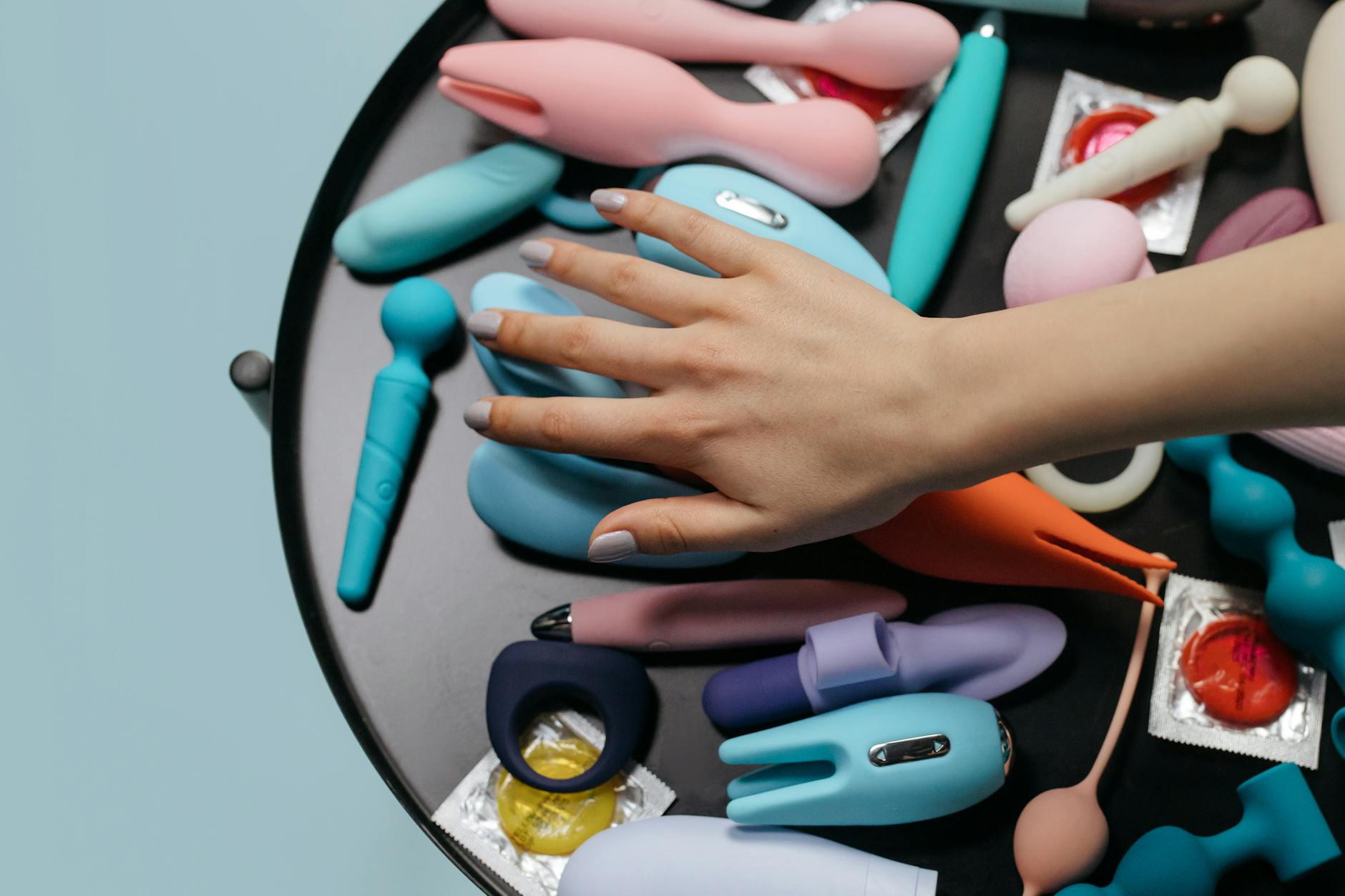
Photo by cottonbro studio on Pexels
The mental game matters more than you think
When sensation feels muted, your brain does something unhelpful. It assumes you're broken. That something is permanently wrong. That pleasure isn't available to you anymore. This thought pattern can actually make numbness worse because now you're adding anxiety on top of medication-related dampening.
This is where understanding the mechanism helps. You're not broken. Your chemistry is regulated. That's different. A lemon clitoral vibrator becomes a tool not just for stimulation but for proof that sensation is still there, just quieter. Sometimes that's enough to shift the mental story.
If you have a partner, they need to understand this too. Many people interpret reduced responsiveness as reduced desire for them. It's not. It's literally altered neurotransmitter availability. Explaining this actually matters for both your pleasure and your relationship.
The timeframe to expect
Medicines take time. So does adaptation. If you've recently started an antidepressant, give yourself at least four to six weeks of consistent experimentation with technique before assuming nothing will work. Your brain is recalibrating. Sensation often does improve somewhat as your system adjusts, even while on the medication.
For people who've been on antidepressants for years, that window has passed. But you can still find techniques and tools that work. They might just look different than they did before medication.
Real talk on the plus side
I'm not going to pretend numbness is fine. It's not. But some people do find that the mental clarity from effective antidepressant treatment actually improves their sexual experience overall, even with reduced physical sensation. Less rumination. Less panic. More presence. That can mean deeper connection, better communication with partners, and paradoxically, better orgasms even if the physical sensation is quieter.
A lemon vibrator's suction mechanism seems to work better for people on antidepressants than traditional vibration does, possibly because it provides more varied stimulation and sustained pressure that the nervous system can register. It's not magic. But it's also not a dead end.
Frequently asked questions
Which antidepressants cause the most sensation loss?
SSRIs in general (sertraline, paroxetine, fluoxetine) have the highest rates of sexual side effects. SNRIs fall somewhere in the middle. Bupropion actually has lower rates. Sertraline seems to be the most commonly reported culprit, though this varies wildly person to person. What matters is your specific response to your medication, not the class.
Can I just stop taking my antidepressant to get sensation back?
No. If your antidepressant is helping your mental health, stopping it is not a solution. Talk to your doctor about alternatives instead. Stopping suddenly can also trigger rebound effects. This is a conversation to have with your prescriber, not something to manage alone.
Does adding a lemon vibrator to my routine mean I need a higher dose?
Not necessarily. Sometimes having a more effective stimulation tool actually reduces the pressure to escalate dosing. But every person is different. This is another conversation worth having with your provider if you're considering dose changes.
How long does it take to feel results with a lemon clitoral vibrator on antidepressants?
Some people feel a difference in the first session. Others take several sessions to understand what sensation patterns work for them. I'd say give yourself at least four to five sessions before deciding whether it's helping. Your nervous system needs time to learn what the new sensation feels like.
Should I switch medications just to get better sensation?
Maybe. If sensation loss is severe and medication compliance is in question because of it, talking to your doctor about alternatives makes sense. But don't switch for pleasure alone if your current medication is working well for your mental health. The mental health benefit is more important than sexual function, even if that feels counterintuitive.
Can other techniques help alongside a lemon vibrator?
Yes. Longer warm-up time consistently helps. Mindfulness practices that reduce performance pressure help. Changing positions to see if different areas are more responsive helps. Using partnered stimulation alongside solo vibration sometimes helps because the variety keeps your nervous system engaged. Experiment within reason.
The actual bottom line
Antidepressants absolutely can dull sensation. But dulled sensation is not the same as lost pleasure. Different tools and techniques can work around medication side effects. A lemon vibrator's specific stimulation pattern seems to be one of them. And when all else feels stuck, having a concrete tool that works is worth something beyond just the orgasm itself. It's proof that your body still knows how to feel good, even when everything else feels quieter.
Your mental health is non-negotiable. Your pleasure matters too. Those things aren't opposed. Start with talking to your doctor. Then experiment with what actually works for your body right now.