Here's the thing about clitoral pain
If you've picked up a lemon vibrator and felt a sharp sting, a dull throb, or that weird sandpaper sensation instead of pleasure, you're not alone. Pain during clitoral stimulation is one of the most common complaints I hear, and it's almost always solvable. The issue isn't that something's wrong with your body. It's usually a combination of three factors: intensity mismatch, technique, and sometimes physiology.
Let me walk you through what's happening and how to fix it.
Why suction-style lemon vibrators can feel painful
The Lem and other lemon clitoral vibrators work differently than traditional vibrators. Instead of buzzing, they use gentle suction and pulsing motions to stimulate the clitoris. This is brilliant for most people, but it can feel intense or even painful if your clitoris is sensitive or if you're not easing into it properly.
Here's the physiology. The clitoris is packed with over 8,000 nerve endings. It's incredibly responsive. When you introduce intense suction, especially at a high setting, those nerves can feel overwhelmed. It's not damage. It's overstimulation. Think of it like someone running their fingernail over your arm at full speed. It doesn't hurt because your arm is broken. It hurts because the stimulus is too much, too fast.
The clitoris also has a protective hood of sensitive skin. When a suction toy creates a seal around the entire area without that buffer, some people experience friction burn or nerve irritation. This is especially true if you're not using enough lubrication or if you're pressing too hard against the toy.
Setting and sensitivity. Start lower than you think
Here's what I recommend to almost everyone who tells me a lemon vibrator hurts:
Don't start on setting 3. Start on setting 1. I know this sounds obvious, but most people skip directly to medium or high because they think "it won't work otherwise." It will. The Lem's lowest setting is still quite powerful, and your clitoris will respond to it. You're not looking for intense sensation right away. You're looking for comfortable, predictable sensation.
Set your lemon sexual toy to pattern 1 and intensity 1. Apply a water-based lubricant to the toy and to your vulva. Wait a full 2-3 minutes of that gentle stimulation before thinking about moving up a setting. Your nerve endings need time to acclimate. This isn't foreplay. This is part of the device's learning curve.
If setting 1 still causes pain after 2-3 minutes, stop. Don't push through it. Pain is information. It's telling you either the toy isn't right for you, or you need to adjust how you're using it.
Technique matters more than you think
How you position the toy makes an enormous difference. The Lem is designed to seal gently around your clitoris, not to be pressed hard against it. A lot of people instinctively press down with force, thinking more pressure equals more pleasure. With suction toys, it's the opposite.
Hold the lemon vibrator lightly. Let it create the seal on its own. You should feel gentle suction, not a vice grip. Your hand position is doing maybe 20% of the work. The toy is doing 80%. If you're white-knuckling it or pressing as hard as you would with a traditional vibrator, you're asking your clitoris to absorb way more stimulation than it's designed to handle.
Also think about angle. Some people have more sensitive tissue on one side of their clitoris than the other. Experiment with shifting the toy slightly left or right, or angling it differently. A half-inch difference can mean the difference between pain and pleasure.
Lubrication is non-negotiable
I can't stress this enough. Use lubrication. Even if you think your body is producing plenty of natural lubrication, use more. Water-based lube creates a smooth interface between the toy and your skin. Without it, even gentle suction can create micro-friction that feels like pain.
Apply lube to the toy before you turn it on. Reapply every 2-3 minutes of use. Yes, this sounds like a lot, but it makes a real difference. Friction burn from a suction toy is rare, but it's preventable with good lube practices.
Avoid silicone-based lubricants if you're using a silicone toy, because they can degrade the material over time. Stick with water-based. It's cheaper, safer, and it washes off easily.
When pain signals something else
Most clitoral pain from vibrators is stimulus-related and fixable. But sometimes it's a sign of an underlying issue worth addressing.
If you experience sharp, localized pain that doesn't improve with lower settings or lubrication, or if pain persists after you've finished using the toy, see a gynecologist. This could indicate vulvodynia, a condition involving chronic vulvar pain that's worth investigating with a professional. It's not common, but it's treatable.
If pain is accompanied by burning, itching, or unusual discharge, you might have an infection or irritation unrelated to the toy. Again, a quick call to your GP is worth it.
If you notice pain only during partnered sex but not with solo play, the issue might be pressure or positioning during intercourse, not the toy itself. This is a conversation for a sex therapist or your partner, not necessarily a medical issue.
Pelvic floor tension and why it matters
Here's something that doesn't get talked about enough. Tension in your pelvic floor can make clitoral stimulation feel painful even when the toy itself is fine. If you're clenching your pelvic floor muscles during arousal, you're essentially creating resistance against the toy. It's like trying to relax while someone's pushing on a tensed muscle. It hurts.
Before you use your lemon vibrator, try this. Lie down. Take three deep breaths. On the exhale, consciously relax your pelvic floor. Some people find it helps to do a Kegel squeeze first (tighten those muscles for three seconds), then release completely. This teaches your body what relaxation feels like.
If you notice you're clenching during pleasure, pause. Breathe. Relax. Then resume at a lower setting. Over time, you'll build the habit of staying relaxed during stimulation. The pleasure deepens when you do.
Other lemon clitoral vibrator alternatives if pain persists
If you've tried all of this and a lemon vibrator still doesn't work for your body, that's okay. Your clitoris might just prefer a different type of stimulation. A vibrator with a broader, flatter head applies pressure over a larger surface area and can feel less intense than concentrated suction. The Berri or Lolly might be worth trying. Read our guide on how lemon vibrators compare to other clitoral toys for a full breakdown of different styles.
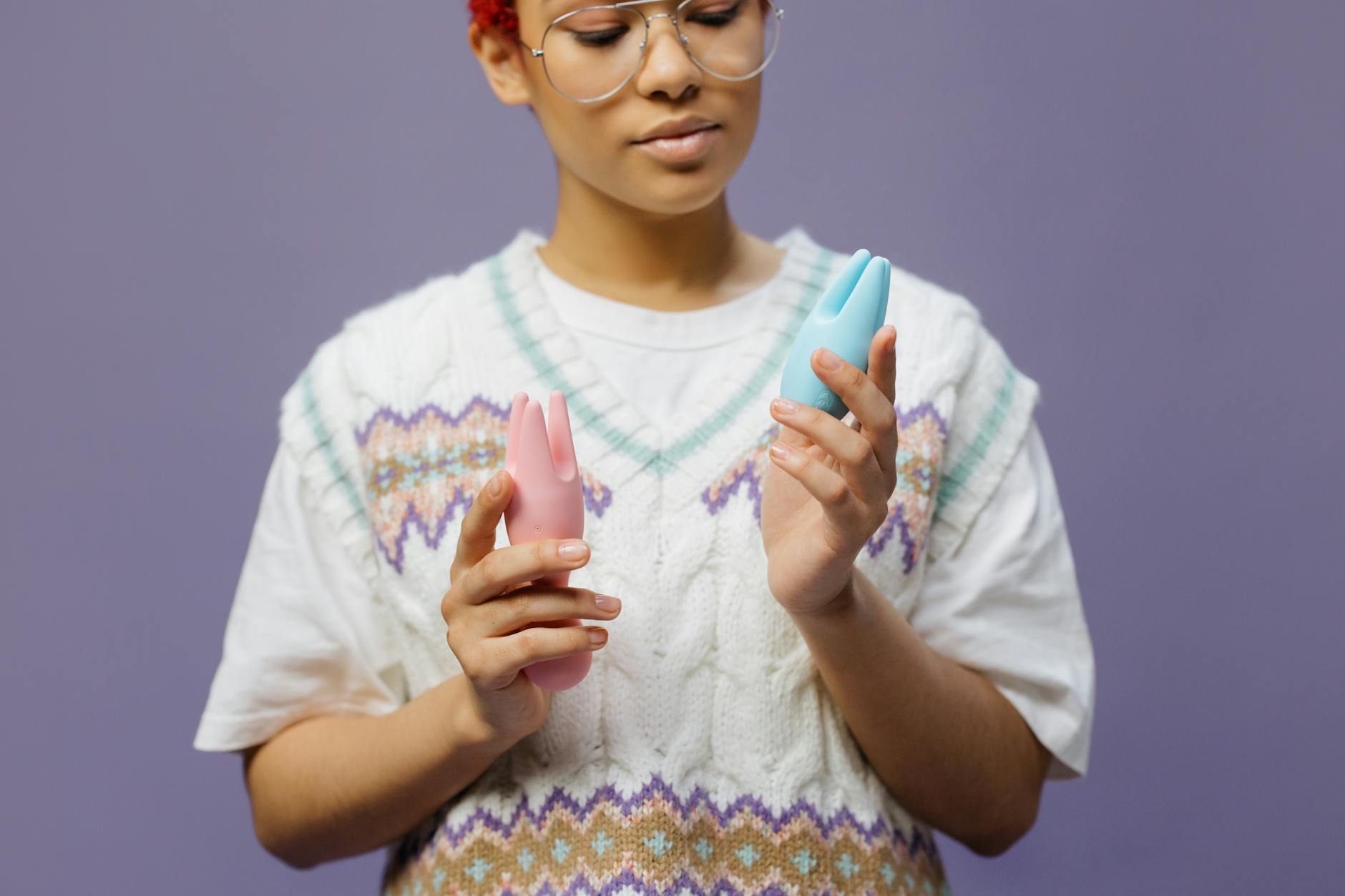
Photo by cottonbro studio on Pexels
Some people also find that pain decreases over time as their clitoris desensitizes slightly and they get more comfortable with the toy. If you're willing to invest a few more sessions at low settings before deciding the toy isn't for you, that can make a difference.
The mental component you shouldn't ignore
Pain isn't always physical. If you're anxious about pain happening, you'll tense up. If you're tense, stimulation feels more intense and more painful. It becomes a self-fulfilling loop.
If this is you, start in a space where you feel completely safe. No time pressure, no distractions, no one else in the house. Use the toy for just two minutes at the lowest setting. That's it. Your only goal is to become familiar with the sensation, not to reach an orgasm. Do this three or four times over a few days. You're rewiring your nervous system's response to the toy.
Many people find that once they've had one pain-free session, their anxiety drops and subsequent sessions feel better. Your brain is a powerful tool. Use it.
FAQ
Why does my Lem vibrator hurt on the lowest setting?
Clitoral tissue is sensitive, and you may need to desensitize gradually. Use the toy for just 30 seconds at a time on the lowest setting, with plenty of lubrication, and give your clitoris rest days. You might also be pressing too hard or not using enough lube. Experiment with lighter touch and more lubrication before assuming the toy is wrong for you.
Is clitoral pain from vibrators permanent?
No. Pain from overstimulation is temporary and completely reversible. Stop using the toy, and the sensitivity will return to normal within hours to a few days. If pain persists for weeks after you've stopped using the toy, that's a sign something else is going on and worth checking with a doctor.
Can lemon vibrators cause nerve damage?
No. Suction toys like the Lem cannot cause permanent nerve damage. Your clitoris has over 8,000 nerves, and they're incredibly resilient. Pain from vibrators is almost always stimulus-related, not damage-related. The worst that happens is temporary irritation, which resolves on its own.
Should I use numbing cream to use my vibrator without pain?
Absolutely not. Numbing cream masks the signal your body is sending you. If something hurts, that's information. Pain is your body saying "adjust this." If you numb the area, you're more likely to overstimulate without realizing it, which can lead to actual irritation. Instead, adjust your technique or settings.
Is pain during clitoral stimulation a sign I have vulvodynia?
Not necessarily. Pain from a vibrator that goes away once you stop using the toy is stimulus-related. Vulvodynia is chronic pain that persists whether or not you're using a toy. If your pain only happens with the vibrator and resolves quickly afterward, you're likely just dealing with an intensity or technique issue. If pain is constant or triggered by other types of touch, talk to a gynecologist.
How do I know if my lemon vibrator is causing harm?
If you experience sharp pain, burning, bruising, or unusual discharge, stop using the toy. Mild irritation, tenderness, or tingling that goes away within an hour is usually normal and not harmful. True harm would involve visible injury, persistent pain, or changes to your tissue. If you're unsure, a quick call to your gynecologist can rule out anything serious.
Here's what comes next
Clitoral pain with vibrators is fixable. Most often it's a matter of starting lower, using more lubrication, and adjusting your technique. Give yourself permission to take it slow. Your clitoris doesn't need intensity to respond. It needs comfort, patience, and the right pressure.
If you've made all these adjustments and pain persists, it might be worth talking to a sex therapist or gynecologist who specializes in pleasure. Sometimes pain is about the body, and sometimes it's about nervous system patterns that benefit from professional support.
You deserve pleasure that feels good. That's worth the effort to figure out.