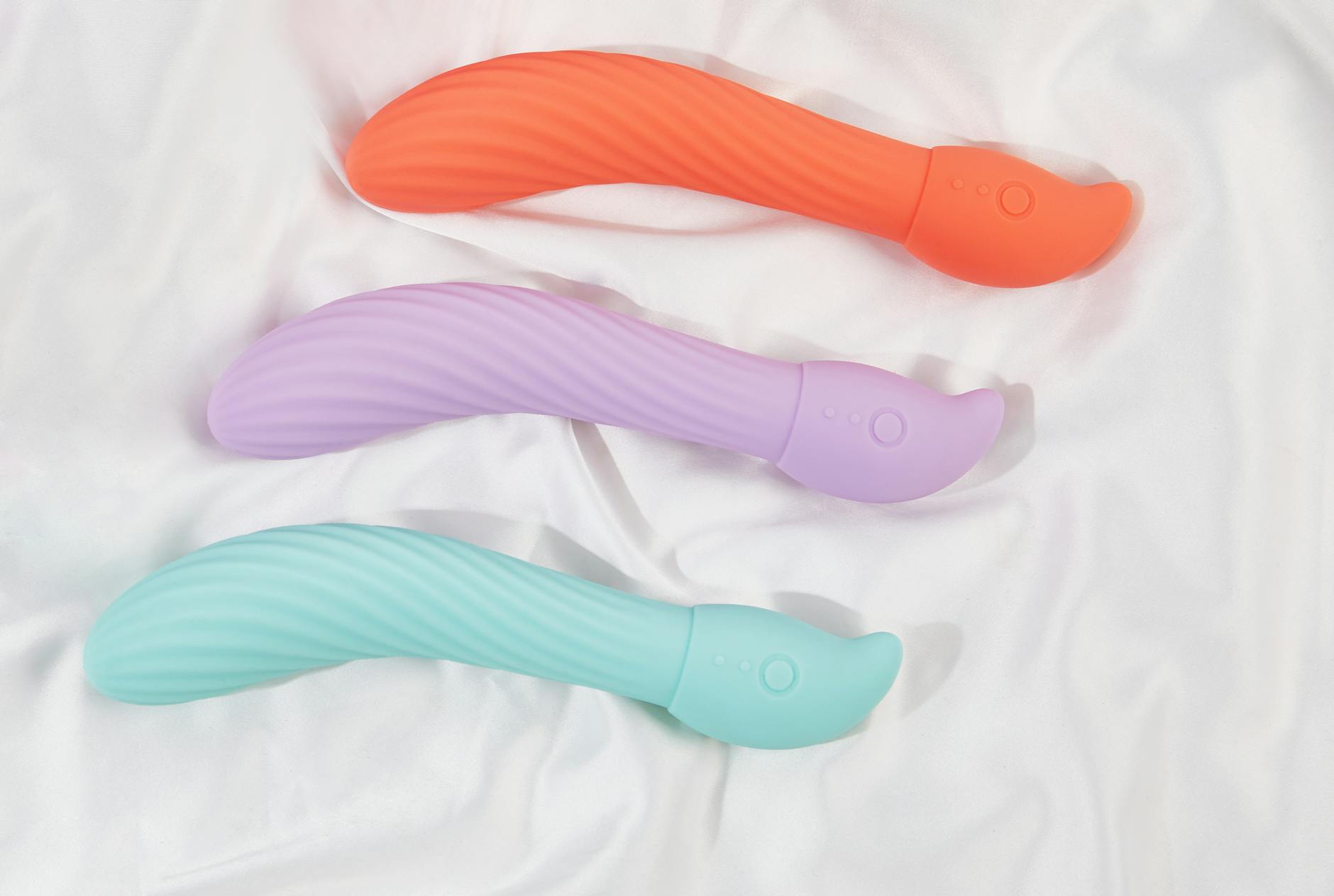
Let's talk about what actually happens when body insecurity shows up in bed
Your brain splits. Half of it is trying to feel pleasure. The other half is running a commentary track about how you look right now. The angle of your body, the softness of your thighs, the way your breasts sit when you're on your back. By the time you realize what's happening, you've already checked out.
That's not a character flaw. That's what happens when you've spent decades absorbing messages that your body exists for someone else's evaluation, not for your own sensation.
Here's the thing though: a lemon vibrator isn't going to make your insecurity vanish. But it does something almost as useful. It gives your brain something so specific, so physically engaging, that the internal critic loses the microphone for a minute. And a minute is enough to remember what pleasure actually feels like.
Why body insecurity kills arousal (the nervous system piece)
When you're stuck in your head about how you look, your nervous system shifts into monitoring mode. You're watching yourself from outside your body. Dissociation is a survival response, and your brain learned it well.
The problem is that arousal requires the exact opposite state. Pleasure lives in sensation, which requires you to be present inside your body, not observing it from a distance.
Estrogen and dopamine drop when you're anxious. Cortisol rises. The blood flow that would normally rush to your genitals gets redirected to your large muscle groups (the freeze response). So arousal literally slows down. Your body gets quieter. And then the voice gets louder: "See? You can't even get wet. You're broken."
You're not broken. You're just managing a nervous system that learned to protect you by stepping outside your body.
How a lemon vibrator breaks the dissociation loop
A lemon clitoral vibrator works because it's specific. You can't think about three things at once. You can sit with body image anxiety and also sit with the sensation of suction stimulation, but the suction wins because it's louder.
The Lem or other lemon-style clitoral vibrators use gentle pulse-and-suction patterns that engage your nervous system in real time. You can't be fully dissociated and also accurately describe what's happening under the toy. Your brain has to stay in your body to process it.
That's neurologically different from penetrative sex or rubbing. Those can happen while you're checked out. Suction requires presence.
For people whose insecurity often centers on how they're being perceived visually, this matters. A lemon vibrator focuses all the neurological attention downward and inward. Away from the mirror in your head.
Practical setup: how to actually do this
1. Change the environment first. Dim the lights or turn them off completely. Not because you're hiding. Because visual input feeds the commentary track. In darkness, your clit is the only thing that exists. Everything else becomes background.
2. Start solo. I know partnered sex is the goal for some people. But solo exploration first, with no performance pressure, is where the actual rewiring happens. Your body needs to learn that pleasure is possible without an audience.
3. Position yourself for access, not for appearance. This means you're not thinking about what position looks best on camera or what angle is flattering. You're positioned to feel good. That's it. Sit on a bed with your back against the headboard. Lie on your side. Recline on pillows. Whatever lets you access your clit without straining.
4. Use lube generously. This is key because it lowers the barrier to sensation. More lubrication means the lemon vibrator glides smoother, which means you need less mental effort to follow the sensation. Less effort equals less room for self-criticism to creep in.
5. Start at the lowest setting and stay there for at least five minutes. You're not chasing the Big O. You're building tolerance for being in your body. Let your nervous system adjust. Notice what you actually feel. Tingles, pressure, warmth, the pulse of blood in your clit. That noticing is the whole practice.
What the self-talk sounds like when you're doing this right
Wrong: "This is taking too long. I'm not working right. I'm broken."
Right: "Okay, I feel pressure here. That's different from yesterday. Interesting."
Wrong: "What if my partner saw me like this? I look stupid."
Right: "I feel a steady pulse. I notice my breathing getting slower."
The shift from evaluating to observing is small. And it's everything. You're not thinking about whether pleasure is happening. You're just describing what your nervous system is reporting. That's presence. That's the antidote to insecurity.
The role of your partner (if you have one)
Eventually, for people who want partnered sex, you'll bring this back to that context. Here's how to actually do that without the shame spiraling.
Have a conversation before you're in bed. Tell your partner something like, "I get caught up in my head about how I look during sex. It kills the feeling for me. I'm going to use a toy to help me stay present. I need you to know this isn't about you or what you're doing. It's me learning to stay in my body."
The right partner will get it. They'll recognize that a lemon vibrator in the room isn't a criticism of their touch. It's a tool that lets you actually feel their touch because you're not checked out.
If your partner responds with insecurity or resistance, read the room. How to Use a Lemon Vibrator When Your Partner Isn't Interested in Toys covers that territory more specifically.
The permission piece (this is the hard part)
Body insecurity is often bundled with a belief that you don't deserve this. That pleasure is something you have to earn, or that needing a tool means you're failing somehow.
Neither of those things is true.
Your body is real. The parts of it you're insecure about are the same parts that belong to models, athletes, and everyone else on earth. Insecurity isn't about facts. It's about a story you've internalized.
Using a lemon clitoral vibrator isn't a workaround for a broken body. It's a practice in staying present in the body you actually have. Which is the only body that can feel pleasure anyway.
If that feels too abstract, start here: pleasure is information. Your nervous system is sending you data about what feels good. Body insecurity is static. You can't process both simultaneously. The lemon vibrator helps you tune into the signal and turn down the noise.
When to bring in other support
If body insecurity is severe enough that you can't be alone with yourself, or if it's preventing you from leaving the house or eating, a toy isn't going to fix that. Those are signs to talk to a therapist who specializes in body image, disordered eating, or trauma. A lemon vibrator can help you practice presence once you're ready. But it's not a replacement for real clinical support.
That said, the two things work together beautifully. Therapy helps you understand where the insecurity came from. Solo practice with a clitoral vibrator helps you rewire your nervous system to tolerate presence in your body. They're not either-or.
FAQ: Body Image and Pleasure
What if I still feel self-conscious even in the dark?
That's common. The darkness helps, but if the inner critic is still loud, it's about nervous system regulation before pleasure. Try progressive muscle relaxation first. Tense each muscle group for five seconds, then release. Work your way from your toes to the top of your head. This signals safety to your nervous system. Then use the lemon vibrator. Often the insecurity quiets down once your body knows it's genuinely safe.
Can I use a lemon vibrator with a partner if I'm insecure about being seen during sex?
Absolutely. Some people find that using a clitoral vibrator while their partner stimulates them or is inside them actually reduces performance pressure. You're not trying to come from their touch alone. The toy is doing part of the work. That takes pressure off both of you. Start with your partner wearing it, hands-on, so you're not simultaneously managing the toy and your insecurity. The toy becomes a point of focus rather than a barrier.
Does using a lemon vibrator make body insecurity worse because I'm "hiding" my body?
No. You're not hiding. You're creating conditions where your nervous system can actually process sensation instead of threat. That's different. And in fact, people who practice solo pleasure with toys often report feeling more comfortable in their bodies overall. Because they've experienced what presence feels like. Insecurity lives in dissociation. Presence kills insecurity.
What if my insecurity is specifically about my clit? Like I'm worried it looks wrong?
Your clit probably looks exactly like every other clit. The internal story you have about it is separate from its actual appearance. That said, using a lemon vibrator can actually help reframe that story. When you're using it and feeling what it's capable of, your clit becomes a source of function and sensation, not an object for evaluation. That shift, from "does it look right" to "what does it feel like," is the actual work. The appearance stops mattering as much once you know what it can do.
I'm dealing with body insecurity plus other stuff, like trauma or disability. Can a lemon vibrator still help?
Maybe. If your insecurity is layered with trauma, a grounding-focused approach usually works better initially. How to Use a Lemon Vibrator When Recovering From Sexual Trauma has specific guidance for trauma survivors. If disability is part of your insecurity, positioning and access become the priority. A lemon clitoral vibrator is actually accessible for many bodies because it requires less fine motor control than manual stimulation. But work with a sex therapist familiar with disability to figure out what works for your body.
How long does this practice take before I stop feeling insecure?
Insecurity doesn't go away permanently. It's a feeling, not a condition to cure. But what changes is how much of your attention it takes up. Most people notice a shift within two to three weeks of regular practice. The insecurity is still there. But it's quieter. Your nervous system learns that your body is safe. And when your body feels safe, pleasure becomes possible. That's the win.
The actual practice
Here's what I want you to do this week: buy or borrow a lemon clitoral vibrator if you don't have one. Set aside 20 minutes when you know you won't be interrupted. Dim the lights. Use lube. Start at the lowest setting. Don't chase anything. Just observe what you feel.
Do that three times. That's it. No pressure to orgasm. No pressure to "succeed." Just practice staying in your body when your brain tries to leave.
Your insecurity is a story your nervous system learned to tell. Presence is a story you can learn instead. A lemon vibrator is just the tool. You're the one doing the work.
If you want to talk through what this looks like for your specific situation, get in touch. I'm here for the questions that don't fit neatly into a blog post.